The Half-True Story of Catherine the Great
Period dramas too often treat their subject with polite reverence and slavish accuracy. Tony McNamara’s new show, The Great, flips the genre on its head, telling the story of Russia’s great Empress with all the grotesque comedy the eighteenth-century Russian court deserves.
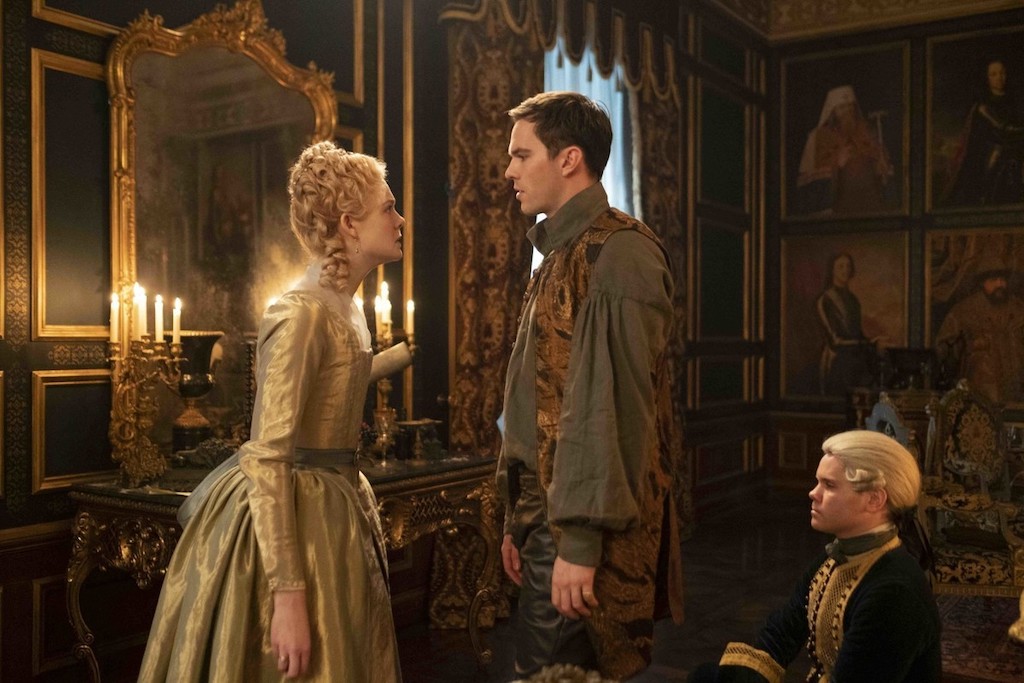
A scene from Hulu’s The Great miniseries.
I love The Great. This new ten-part Hulu series was written by Tony McNamara, the screenwriter who gave us the excellent film The Favorite, directed by Yorgos Lanthimos. A darkly hilarious “period comedy,” The Favorite showed the grotesque eighteenth-century court life of a late-age Queen Anne of England. Ailing and incompetent, she was vulnerable to her ruthlessly ambitious “favorites,” each vying to be the power behind the throne. A surprisingly factual account of the court, The Favorite’s depictions of cruelty, decadence, and vice turned the pious genre of aristocracy-worshipping “heritage films” and TV shows — Downtown Abbey, The Crown, and The Young Victoria — on its head.
The Great shares a broadly similar style and subject with The Favorite, though it is neither as dark nor as committed to factual accuracy. The series shows the grotesque royal court life of Empress Catherine II of Russia, aka Catherine the Great (played by a terrific Elle Fanning), whose marriage to Emperor Peter III is necessarily truncated when she deposes him and takes his throne. Peter is played by Nicholas Hoult (also in The Favorite) who gives a sublime performance, dominating every scene he’s in.
A gorgeous, sunny-looking show dominated by glowing yellows and greens, Catherine’s signature colors as she gathers power, The Great is manifestly McNamara’s work. As in The Favorite, irreverent “chapter titles” announce the major sequences. The Favorite gave us “This Mud Stinks” and “What an Outfit”; The Great features episode titles such as “And You, Sir, Are No Peter the Great,” “War and Vomit,” and “Meatballs at the Dacha.”