Iowa Governor: Your Job or Your Life
In states like Iowa, right-wing governors have used the coronavirus pandemic to continue their assault on workers — forcing thousands to go back to work prematurely and promising to pull unemployment benefits for anyone who has the temerity to put their health first.
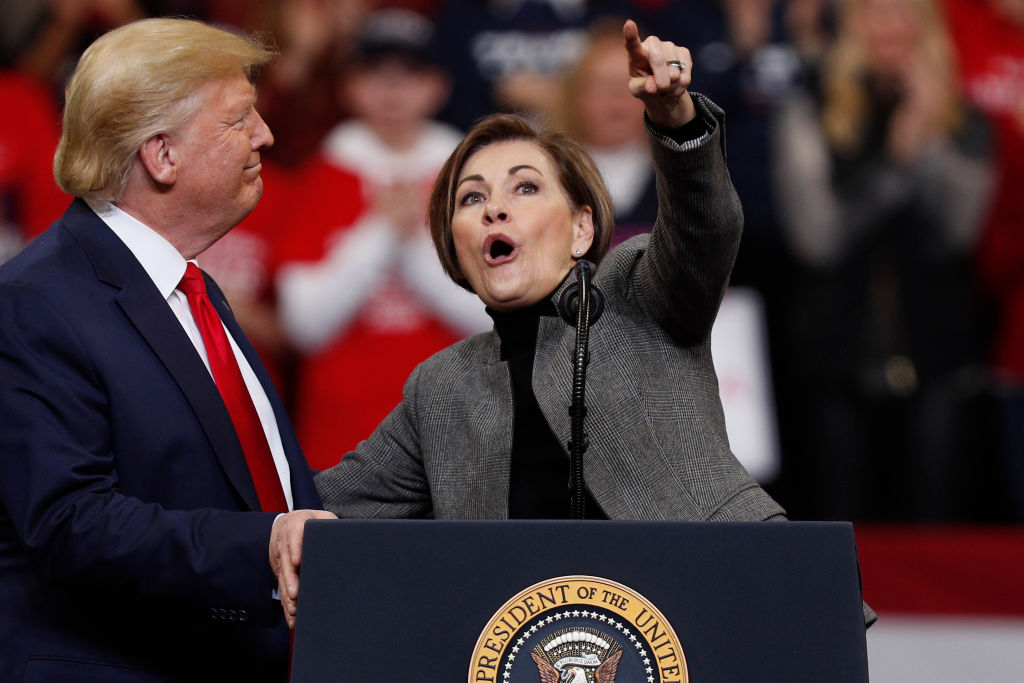
Iowa governor Kim Reynolds points to the audience while speaking beside President Donald Trump during a campaign rally at Drake University on January 30, 2020 in Des Moines, Iowa. (Tom Brenner / Getty Images)
The COVID-19 crisis has unfolded in predictably troubling ways in Iowa. Acting on a false sense of rural isolation, the state is one of only five (four of them in the upper Midwest) never to issue a statewide “shelter-in-place” order. And now, even as the virus continues to take its toll in Iowa cities and factories, the state is one of a handful to lurch toward “reopening” — a decision, the Iowa Medical Society warned last week, “all but certain to cause a spike in new COVID-19 patients and potentially overwhelm our health care system.”
With Iowa’s legislative session suspended, Governor Kim Reynolds (“a pro-life, pro-family, pro-taxpayer, limited-government conservative” who took over as state leader when Terry Branstad was appointed ambassador to China in 2016) has led the response to the pandemic. That response has been, to put it simply, Trump-like. The governor’s office has relied on a mystifyingly opaque “matrix” to calibrate public health measures, its every move marked by a slavish deference to business interests. Facing criticism over COVID-19 testing, Reynolds took the advice of Iowa-born actor Ashton Kutcher and signed a $26 million no-bid contract with an unproven Utah testing firm.
The state is facing a jobs crisis that echoes the nation’s. New weekly unemployment claims spiked dramatically in mid-March. Over the next six weeks over 260,000 Iowans filed for unemployment insurance — fully 15 percent of the labor force and more than four times as many claims as were filed in the worst six-week stretch of the Great Recession.