Delivering Food in a Pandemic
On Monday, Italy began to ease COVID-19 restrictions, with more than 4 million returning to work. But some, like delivery workers, never stopped working — nor organizing for labor rights in an industry deemed "essential" and putting workers at serious health risk.
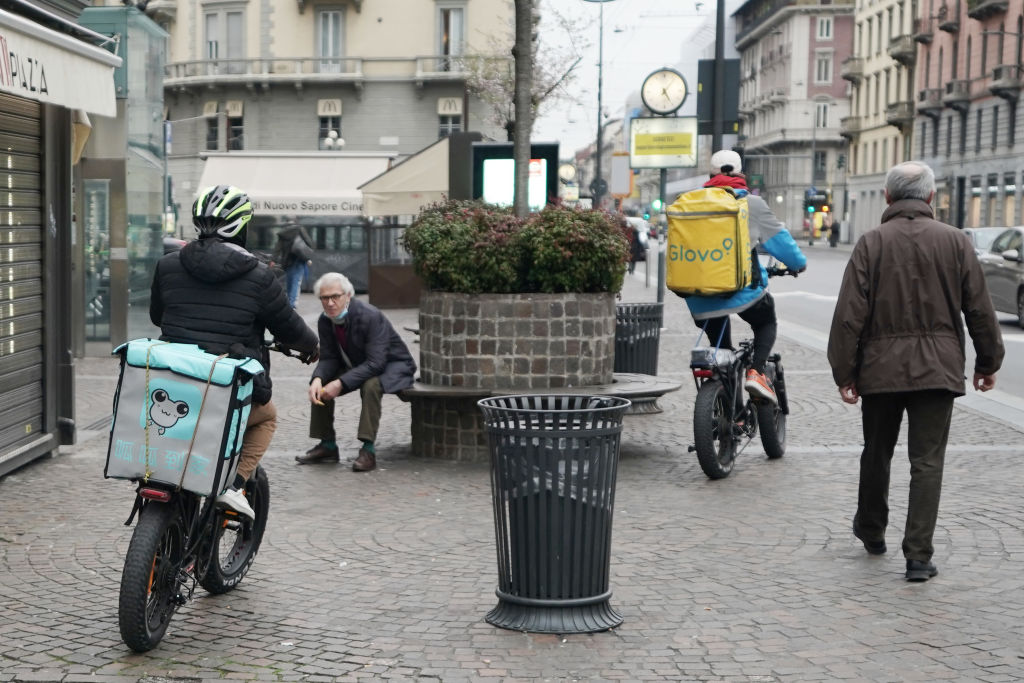
Food delivery riders on March 12, 2020 in Milan, Italy. (Vittorio Zunino Celotto / Getty Images)
At just shy of 7 PM, Gabriel grabs his square orange bag, walks down three flights of stairs, takes his red bicycle, and leaves his house. He starts riding through downtown Bologna, Italy. The city is desolate. His shift as a rider of the My Menu delivery food app will start in a few minutes: he will take and deliver orders until 9 or 9:30 PM.
On March 11, the “I Stay Home” decree was announced by Prime Minister Giuseppe Conte. The emergency coronavirus measures turned into a nationwide restriction: travels and outdoor gatherings were banned, movements were heavily limited.
Almost two months later, according to government data, 29,315 people had died from the virus, while more than 98,000 positive cases have been reported as of May 5. Italy was at its knees.