Pandemics Can Mean Strike Waves
In discussions about the last global pandemic, the “Spanish flu,” we never hear about the strike wave that kicked off at the exact same time. But in 1919, one-fifth of American workers walked off the job. We shouldn’t be surprised that labor militancy is spreading during today’s coronavirus pandemic.
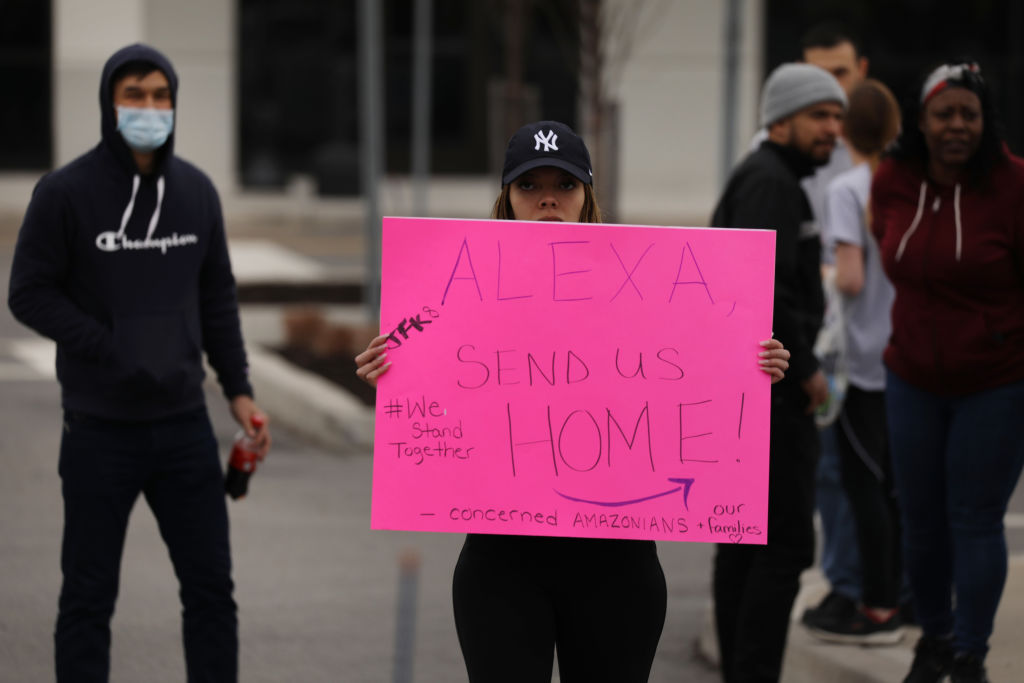
Amazon workers hold a protest and walkout over conditions at the company’s Staten Island distribution facility on March 30, 2020 in New York City.Spencer Platt / Getty
It is rarely noted that the greatest burst of labor militancy in the history of the United States, the 1919 strike wave, overlapped with the worst health crisis in the country’s history, the 1918–19 influenza pandemic. Four million workers struck in 1919, one-fifth of the workforce, a proportion never since equaled.
Strikes that year were startling not only for the sheer number of workers involved but also for the way they fundamentally challenged the status quo. In Seattle, a strike by shipyard workers expanded into a general strike that shut down the city for a week. In Boston, policemen went on strike. In New York, actors shut down Broadway theaters, while 50,000 men’s clothing workers stayed out of work for thirteen weeks.
In September, some 300,000 workers walked off their jobs in the first national steel strike, taking on the most powerful corporations in the country. In November, nearly 400,000 coal miners struck, defying a plea from President Woodrow Wilson and a federal court injunction.