Bernie Sanders’s Campaign Was Trying to Save American Democracy
Bernie Sanders’s campaign was caricatured as irrationally angry, even Trumpian. In reality, it gave voice to the voiceless, raised people’s sense of what’s possible through collective action, and refused to accept that exploitation and the fear of economic devastation should be the lot of millions.
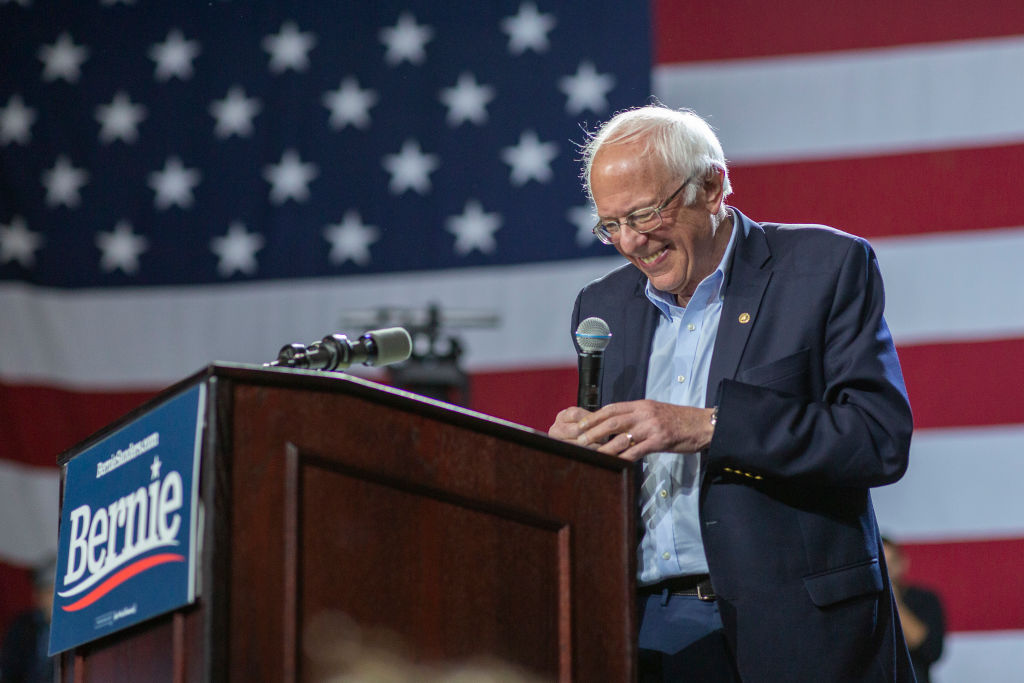
Presidential candidate Bernie Sanders holds a campaign rally at the Los Angeles Convention Center on March 1, 2020 in Los Angeles, California. David McNew / Getty
Democracy means that people choose how we will live together, rather than accept the hierarchies and boundaries we are born into as fate. It means making that shared choice in a way that honors everyone’s equal value and tries to give each person equal political power. By that simple standard, the United States is not much of a democracy. In 2016 and 2020, one campaign tried to make democracy more real, and in doing so became a movement and a generational watershed for people who have come to understand how an unequal and undemocratic country is killing them and laying waste to what they love. Such a thing doesn’t end when a campaign stops, but what it becomes is uncertain.
Bernie Sanders’s departure from a Democratic primary race that is shuddering from the impact of COVID-19 marks the end, for the moment, of the greatest wave of social-democratic energy and socialist imagination in the United States for about a century. It comes, too, just as events are once again vindicating his calls for universal health care, economic security, and worker power, as a pandemic tears through the communities of the most vulnerable, precarious, and powerless Americans.
It was astonishing to hear the Sanders campaign described, as it routinely was in the mainstream press, as angry, bellicose, even a Trumpism for the Left. To be anywhere near the campaign — to know any of the people going door to door and making regular small donations — was to understand that it was idealistic in spirit, hopeful in tone, generous in its sense of possibility. It modeled what you might call patriotism for adults, disillusioned patriotism without exceptionalist bullshit.