Shuggie Bain, a Window on Postindustrial Glasgow
Douglas Stuart’s debut novel, Shuggie Bain, richly conveys the harshness of life in Thatcher-era Scotland. Yet with its focus on the resilience of working-class women, this love letter to Glasgow is anything but misery-lit.
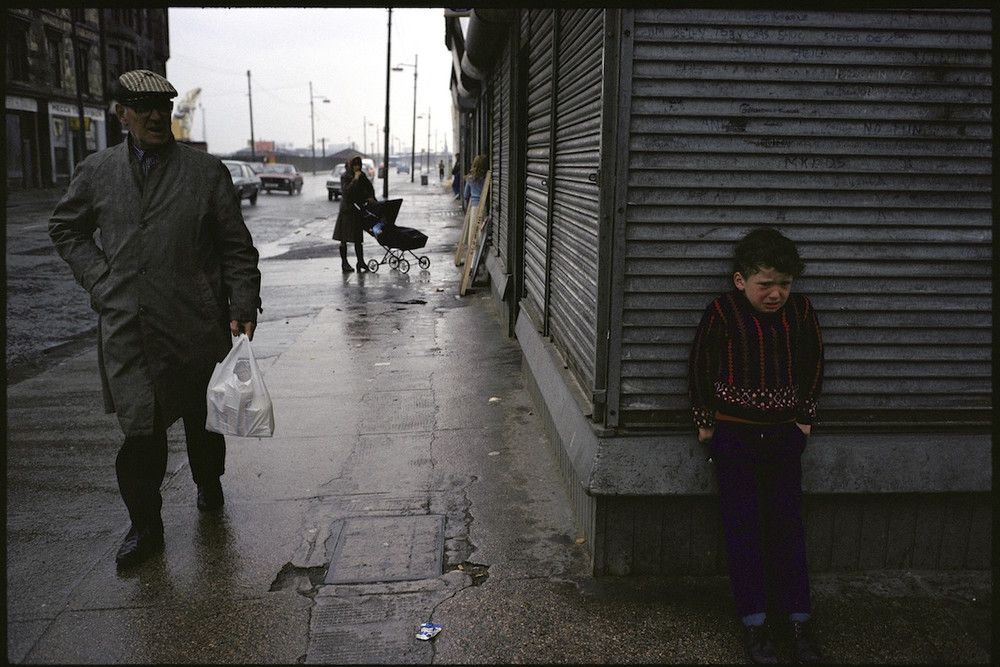
Raymond Depardon / Magnum
With his exquisitely detailed debut novel, Douglas Stuart has given Glasgow something of what James Joyce gave to Dublin. Every city needs a book like Shuggie Bain, one where the powers of description are so strong you can almost smell the chip-fat and pub-smoke steaming from its pages, and hear the particular, localized slang ringing in your ears.
It’s a novel about love, the real, complicated kind. Shuggie, growing up “different” and effeminate in 1980s Glasgow, loves his mother, Agnes, despite her tendency toward alcoholic binges that make her neglectful and mean. Agnes, glamorous, proud, and “gleaming” like a Scottish Liz Taylor, loves her husband, Shug, even though he’s cruel and unfaithful. And although it’s depicted as poverty-stricken, miserable, and dark, the book is also a love letter of sorts to Glasgow. It’s a portrait of a city ravaged by Margaret Thatcher’s government that is both unflinchingly authentic and poignantly tender.
It’s difficult to convey the brutal and lasting impact of pit and shipyard closures on Glasgow to those who aren’t familiar with the city. Some of Stuart’s description, set in 1981–89, still rings startlingly true today. The loss of the industries that made Glasgow a proud and powerful working-class city had a profound effect on its communities. Driving around town working as a taxi man, Shug notes: