We Should Nationalize Food Delivery Apps and Turn Them Into a Public Food Service
Faced with the coronavirus shutdown, more people are getting meals delivered straight to their homes. At a time of mass panic buying, the state should step in to guarantee a smooth food supply — and start by turning platforms like Uber Eats and Grubhub into a public service.
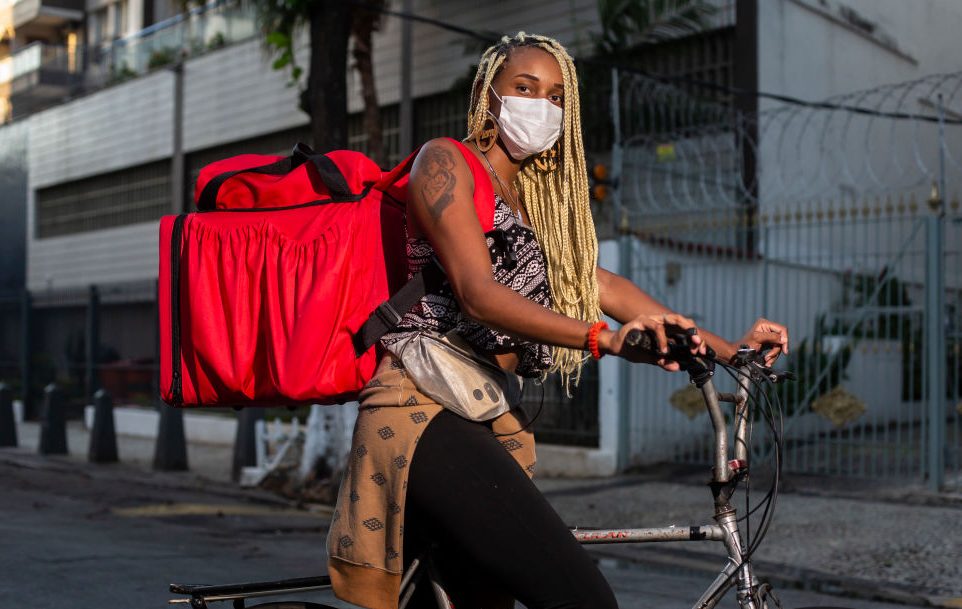
Carla Estefani, 21, poses for a portrait on March 24, 2020 in Rio de Janeiro, Brazil. She has been working as an app delivery courier for two months. Bruna Prado / Getty
On Monday, the Labour leadership contender Rebecca Long-Bailey called for the British government to set up a national food service as a means to deal with food poverty in the current COVID-19 crisis. Amid widespread panic buying and a general economic slowdown, many citizens are anxious about disruption to supplies — or even about the consequences of leaving their homes.
Over in Denmark, social-democratic prime minister Mette Frederiksen put her own spin on this question by saying it might be better for Danes to purchase takeout rather than go to supermarkets. The Danish government has been admirably swift in its response to COVID-19 — and, as a courier for the food platform Wolt in Copenhagen, I was struck by her comments.
But for mass food deliveries to be workable, we need a more coordinated response — with the creation of a national food service as a new branch of social care. As Callum Cant’s writing on Deliveroo suggests, we have part of the basis for this already, in the technology behind existing food platforms. But first, this technology needs to be taken into public ownership — and made to work for all of us, not for private profit.