Union-Busting During a Pandemic Could Become Deadly
With a pandemic raging, Oberlin College is outsourcing 108 unionized campus jobs in the interests of cost-cutting. Universities across the country are doing the same. We can’t let them get away with it.
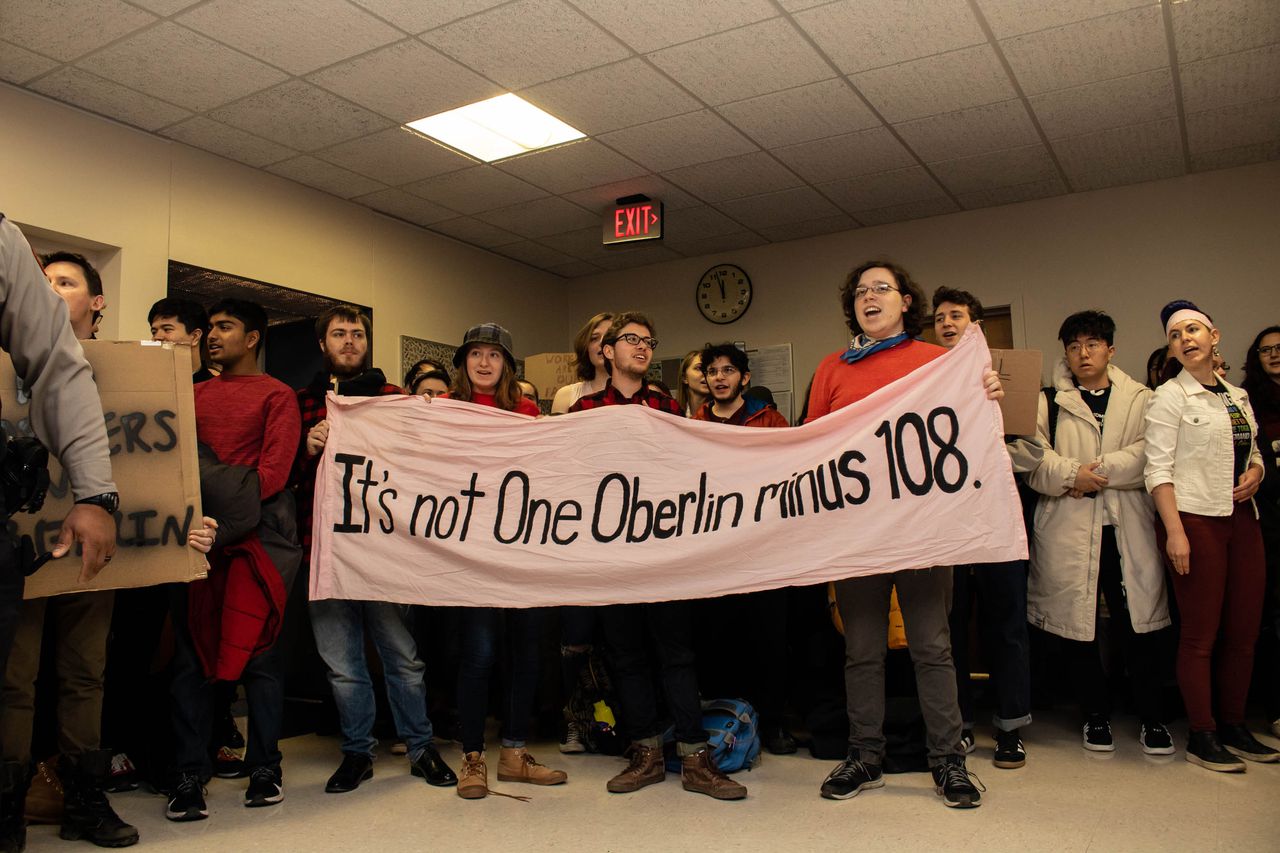
Hundreds of Oberlin students and community members gathered outside a faculty meeting to protest potential layoffs of union staff. Photo: Pearse Anderson
Like schools across the country, Oberlin College has gone remote in response to the COVID-19 outbreak. As students left campus on March 16, many mourned not only the loss of community and increased financial strain that returning home would bring, but also the effective defanging of a powerful and growing student-labor solidarity movement founded roughly a month earlier.
Oberlin’s solidarity organizing, which is attempting to save 108 unionized campus jobs threatened by outsourcing, is part of the growing movement for labor rights in higher education. Like Oberlin, campuses across the country — most notably, graduate students in the University of California system striking for a cost-of-living adjustment — have faced unforeseen barriers to their organizing efforts as a result of campus closures.
But these closures also underscore the importance of the issues organizers were already mobilizing around: in order to survive, during normal times, and especially during an emergency, people need sustainable livelihoods and health care. As Oberlin moves to outsource the positions of 108 unionized workers who are, at this moment, sanitizing the campus against COVID-19, it is leaving them at risk of losing their jobs, health care, and paid sick leave in the midst of a global pandemic. The college is engaged in a particularly deadly form of union-busting.