We Already Have Public Health Models That We Could Scale Up to Fight Coronavirus
We cannot afford to come out of the coronavirus crisis without ending a health care system that decides whether we live or die based on our ability to pay the bill. Luckily, we already have working models to do just that.
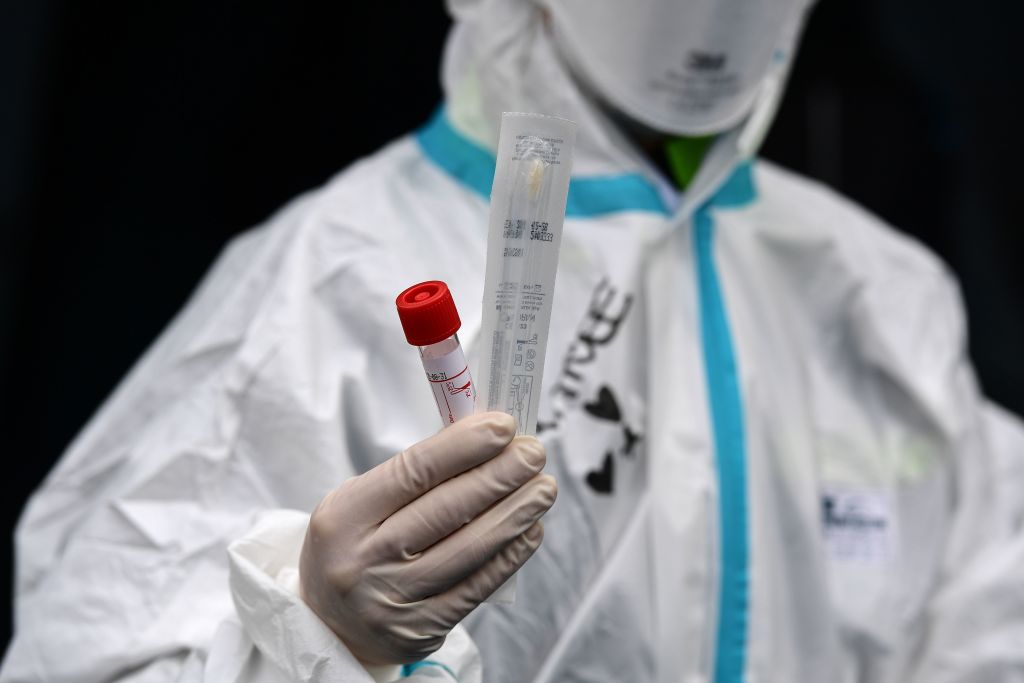
A hospital employee wearing protection mask and gear shows a swab for coronavirus testing at the Brescia hospital, Lombardy, on March 13, 2020. Miguel Medina / AFP via Getty
Former Montana senator Max Baucus distinguished himself in Congress by being a dutiful errand boy for the nation’s health insurers and pharmaceutical companies. As chair of the Senate Finance Committee, he was one of the leading architects of the Affordable Care Act (ACA), whose key provision, the individual mandate, guarantees multibillion-dollar profits for the health insurance industry. He refused to allow Medicare for All advocates to testify before his committee and played a decisive role in preventing a public option from being included in the bill. The nearly $4 million in campaign contributions he received from the private health industry from 2003 to 2008 was money well spent on the politician who was known around Washington as the “Senator from K Street.”
Despite his bought-and-paid-for hostility to public health insurance, Senator Baucus was responsible for writing an extremely obscure provision into the ACA, one that takes on new significance in the light of the coronavirus pandemic. The insurance industry’s kept senator made everyone living in the small town of Libby, Montana, potentially eligible for Medicare coverage because of a serious public health emergency.
Libby is a former mining town near the Canadian border that suffers from one of the worst environmental disasters in the country’s history. For decades, asbestos fibers in the vermiculite ore mined in the area poisoned the residents of Libby and the surrounding county. As a Huffington Post report on the disaster describes it,