All of a Sudden, Housing Is on the Agenda
Despite years of a deep crisis across the United States, affordable housing has never been a major issue on the national agenda. That’s changing.
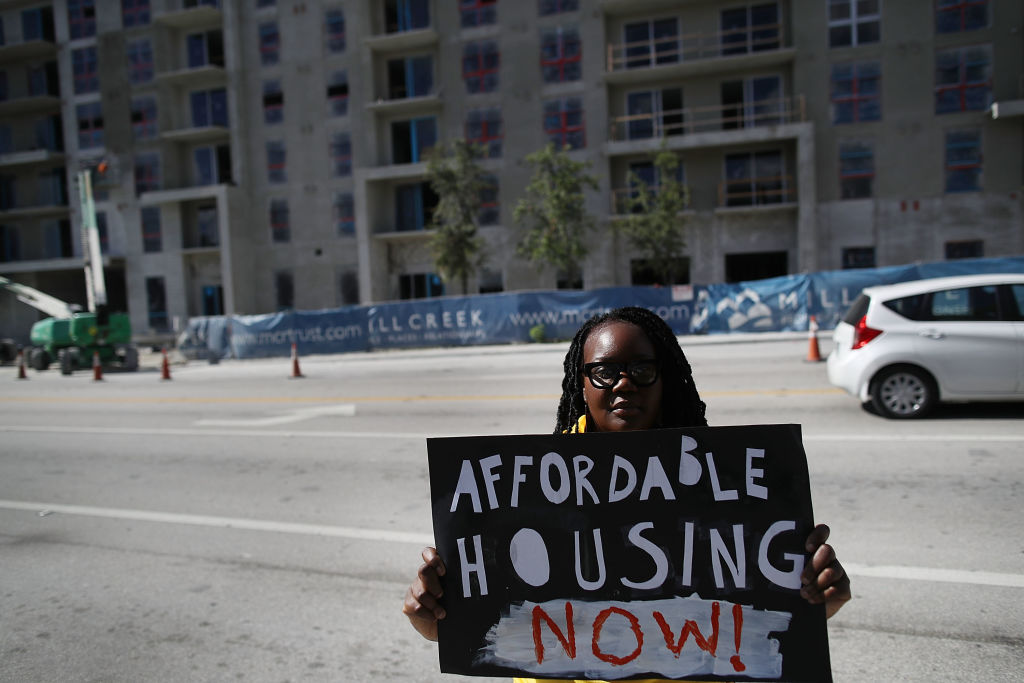
Daniella Pierre joins other protesters across the street from a condo that is being built as they ask for affordable housing to be set aside in the city and county on July 27, 2017 in Miami, Florida. Joe Raedle / Getty Images
In the brief yet seemingly endless time between the 2016 primary and the 2020 primary, the issue of housing grabbed attention on the national stage. Shockingly, given the devastating effects of the 2008 recession on the housing market across the country, presidential candidates in the 2012 and 2016 elections did not release detailed housing plans or campaign on promises to solve the housing crisis. In this year’s primary, that’s changed.
Early in her campaign, Elizabeth Warren relaunched the housing plan she had introduced in 2018, which proposes the construction of 3 million new housing units, a down-payment assistance program for people in formerly redlined neighborhoods, and limits on investor purchases of single-family homes, among other things. Julián Castro, Cory Booker, and Kamala Harris have also introduced less visionary housing plans. And in September, Bernie Sanders introduced the Housing for All aspect of his platform, which includes a national rent-control initiative (something none of the other candidates have proposed), construction of 2 million new social housing units, full funding of public housing, and restrictions on inclusionary zoning. Alexandria Ocasio-Cortez recently released a housing bill that is similar to Sanders’s, and Rashida Tlaib is preparing to release another bill later this fall.
So why is housing a presidential campaign issue in 2020, when it barely merited a mention in the aftermath of the housing crisis? Conventional wisdom makes housing a tricky issue for a national campaign: unlike health care, for which the needs and desires of voters look relatively similar across the country, the housing needs of working people in rural areas, postindustrial cities, gentrifying urban cores, and sprawling suburbs look very different. A homeowner in foreclosure and a cost-burdened renter may both be victims of the housing market writ large, but there hasn’t been a coherent framework that places both of them in the same context and identifies corporate landlords and government disinvestment as the root causes.