The UAW Agreement Is a Bad Deal
After launching the longest strike in decades, General Motors workers are voting on a tentative deal. But the agreement meets neither of the strikers’ most important demands: ending plant closings and scrapping the rotten system of tiered pay and benefits.
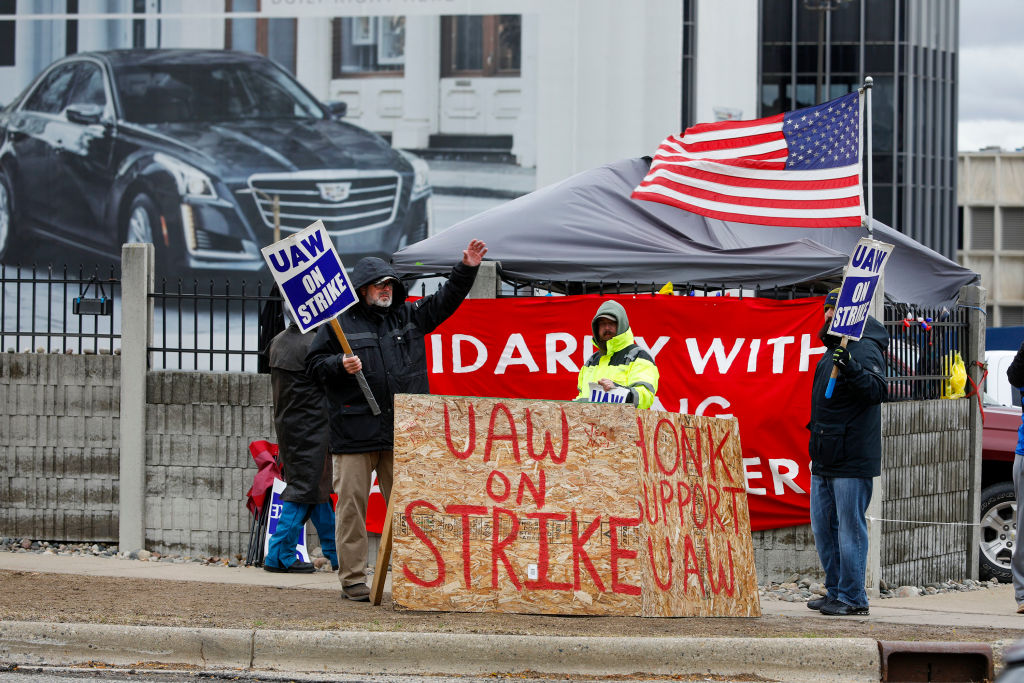
Striking United Auto Workers members picket at the General Motors Lansing Grand River Assembly plant for the fifth week of the strike on October 16, 2019 in Lansing, Michigan. Bill Pugliano / Getty Images
The larger the signing bonus, the more they’re stealing from your back pocket — that’s the standard that striking workers can use to judge the tentative agreement between the United Autoworkers (UAW) and General Motors (GM). The deal would give most employees $11,000 and even “active temporary employees” $4,500 for ratifying the deal.
UAW strikers — who have now spent five weeks on the picket line, the longest stretch in decades — are still processing what else is in the agreement. The deal was announced on October 17, a twenty-page summary went up on the UAW website the following day, and local union informational meetings began on Saturday. The majority of strikers will likely decide yay or nay based on the informational meetings and summary booklet they receive the day they vote. Unfortunately, workers don’t have much space to study, read, unpack, and discuss the general outline of the contract, let alone the actual language — voting is to be completed by Friday.
But even from the summary, it’s clear that strikers’ most important demands — ending “tiered” pay and benefits and keeping open the four US plants slated to close — have not been met. This is particularly striking since UAW officials chose GM as the first of the Big Three automakers to negotiate with precisely in order to prevent those closings.