Macri and the Argentine Right Failed. But What’s Next?
- Nicolas Allen
Mauricio Macri’s time in power was an unmitigated disaster for working people in Argentina. As the country votes today, it’s time to completely reject his failed neoliberal politics.
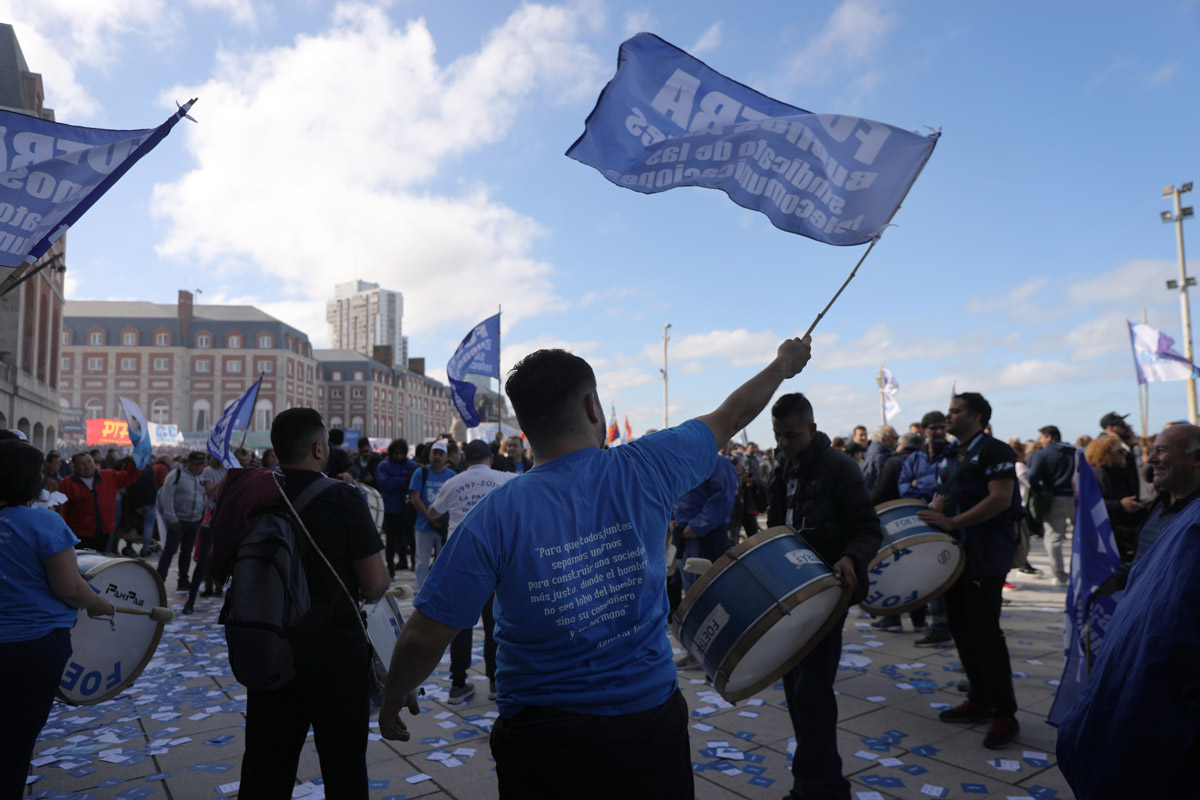
Supporters of Frente de Todos (Front for All) wave flags at the closing rally for presidential candidate Alberto Fernández and his running mate Cristina Fernández de Kirchner on October 24, 2019 in Mar del Plata, Argentina. (Spencer Platt / Getty Images)
When CEO-politician Mauricio Macri won Argentina’s 2015 presidential race, international analysts were tripping over themselves to pronounce the Latin American Pink Tide dead. But today, approaching the end of his four-year term, Macri’s once lauded set of talking points — hitting restart on the national economy, leaving behind “seventy years of populism,” and welcoming a “flood of investment” — have all but vanished.
The official death knell was sounded on August 11, the day Macri was trounced in the country’s primary elections. The shocking results were all the more staggering for the magnitude of Macrismo’s defeat, and for the fact that polls had predicted a tie between the opposition party Frente de Todos and Cambiemos, Macri’s ruling conservative coalition. Instead, with a seventeen-point national advantage, the progressive Frente de Todos coalition, headed by Alberto Fernández and Cristina Fernández de Kirchner, is all but guaranteed a huge win in today’s general elections.
With the end of Macri’s government now in sight, Argentina faces both a political opening and an uphill battle. While many hope for a reversal of the most extreme measures implemented since Macri took office, his party has wrought such havoc that recovery will be difficult. For one, Macri has returned Argentina to its pre-Kirchner status as a serial IMF debtor; in just three years, Macri’s monetary policies prompted Argentina to sign a $56.3 billion financing deal with the IMF, the most extensive rescue package in the organization’s history. Argentina is now the most indebted country in Latin America (with a debt that rose to 77.4 percent of GDP in 2018). Making matters worse, annual inflation stands at nearly 60 percent, and the risk of default is ever-present.