You Can’t Save the Planet by Yourself
Buying more environmentally friendly products gives us the sense that we’re doing something about climate crisis. But the call to shop more ethically is having a pitiful effect on CO2 emissions — and may even stop us from questioning the priorities our economy is organized around.
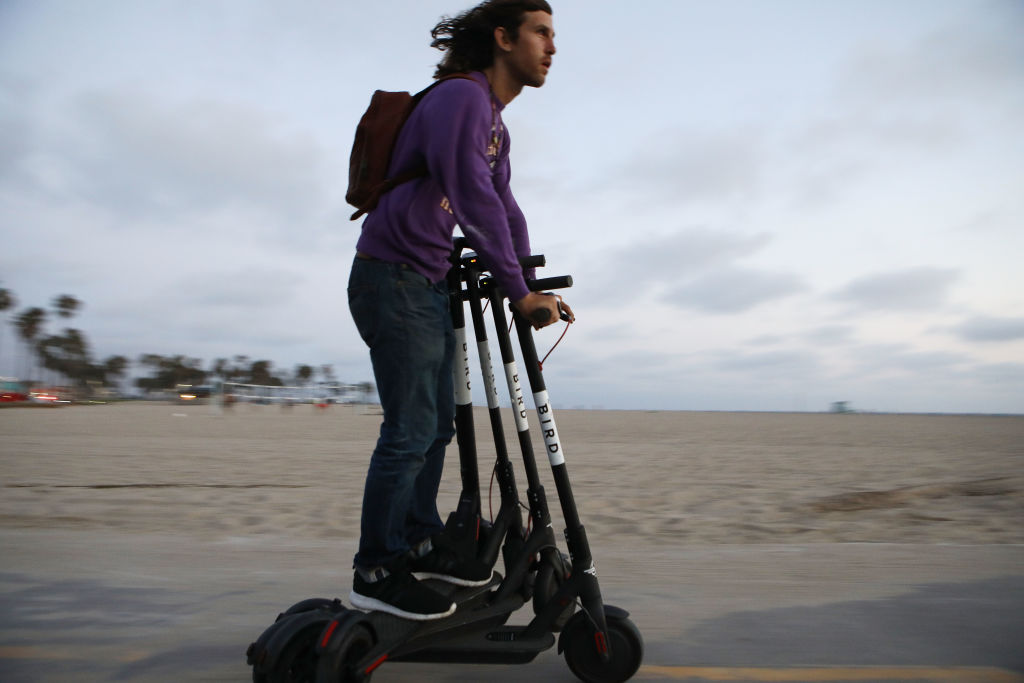
A man rides a Bird shared dockless electric scooter while transporting three others along Venice Beach on August 13, 2018 in Los Angeles, California. (Mario Tama / Getty Images)
The climate crisis is probably the biggest challenge humanity has ever faced, and its scope and urgency are constantly increasing. It is clear that we have to reduce our CO2 emissions and that this is primarily the responsibility of the Global North.
From this, it’s easy to conclude that “we in the West” have to change our lifestyles in order to achieve a fairer and more sustainable world. It’s no surprise, then, that ethical (or “sustainable”) consumerism has become an increasingly widespread response to the looming disaster. Indeed, a 2018 study conducted in the UK and United States revealed that 70 percent of people believe that individual consumers are most responsible for protecting the environment.
Sustainable consumerism is attractive for producers and consumers alike — after all, it offers the possibility to continue consuming while also caring for others and the environment. People are given the apparent option of concretely “doing something” against the abstract and overwhelming danger of the climate crisis — without the need for radical change.