Boris Johnson’s Prime Ministership Lies in Ruins
The UK Supreme Court has torpedoed Boris Johnson’s entire strategy for his prime ministership and likely sparked a civil war inside the Conservative Party. As elections approach, the danger now is a Tory lurch to the far right.
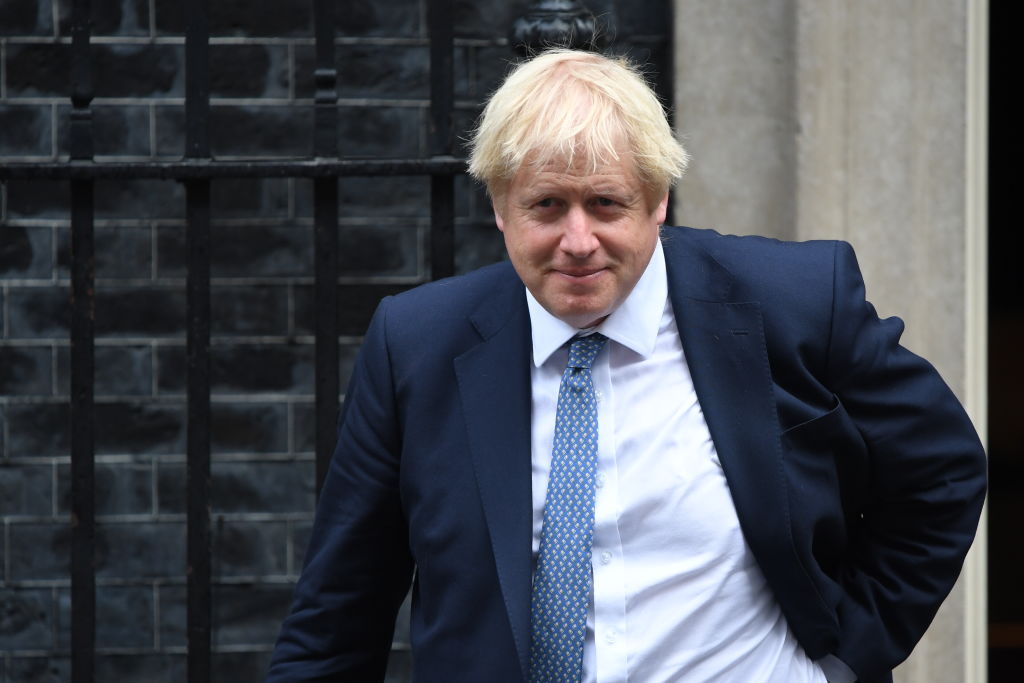
British prime minister Boris Johnson leaves Downing Street on September 26, 2019 in London, England. (Chris J Ratcliffe / Getty Images)
On Tuesday morning, the Supreme Court in the United Kingdom delivered its verdict on whether Boris Johnson’s move to shut down Parliament was justified. The case was brought after a Scottish court ruled the prorogation was unlawful: most people I spoke to at the Labour Party conference in Brighton assumed the verdict from the London court would be scathing but stop short of upholding the decision. Johnson had clearly felt the same, and he was in New York for a United Nations gathering and a meeting to discuss post-Brexit trade options with Donald Trump. British journalists in New York rushed across the city to the hear the prime minister’s reaction to the news that the court had delivered a unanimous decision declaring the move unlawful, and the fact that the speaker of the House of Commons, Conservative John Bercow, had told members of Parliament to prepare to return to work at 11:30 the following morning.
The Labour Party conference was hastily reorganized, with Jeremy Corbyn’s speech swiftly moved to that afternoon and his deputy Tom Watson’s speech canceled. Johnson lashed out several hours after the announcement, claiming it would make Brexit negotiations impossible despite also claiming the decision had nothing to do with Brexit. Opposition politicians and Conservatives alike queued up across broadcast media to attack the new prime minister and ask whether he would apologize to the queen after misleading her. The Tory Party conference next week was always likely to be difficult for Johnson and his party, but now civil war within the Conservatives is inevitable and questions remain over whether the conference can go ahead at all with Parliament back in session, as well as how Johnson will address the decision.
Corbyn’s speech reiterated the workers’ rights commitments that shadow chancellor John McDonnell had announced the day before: moving to a four-day workweek as standard; a higher minimum wage; abolishing Tory social security cuts, and investing in councils. He also backed the bold Labour decision, announced just as the Supreme Court ruling was delivered, to aim for zero carbon emissions by 2030, in a Green New Deal that promised to nationalize the six biggest energy firms, build a fleet of publicly owned electric cars, and build three publicly owned battery factories.