On the Clock and Off
As leftists debate what their labor strategy should look like, many are turning to the rank-and-file strategy. A longtime union activist reflects on a lifetime of struggle in the rank and file.
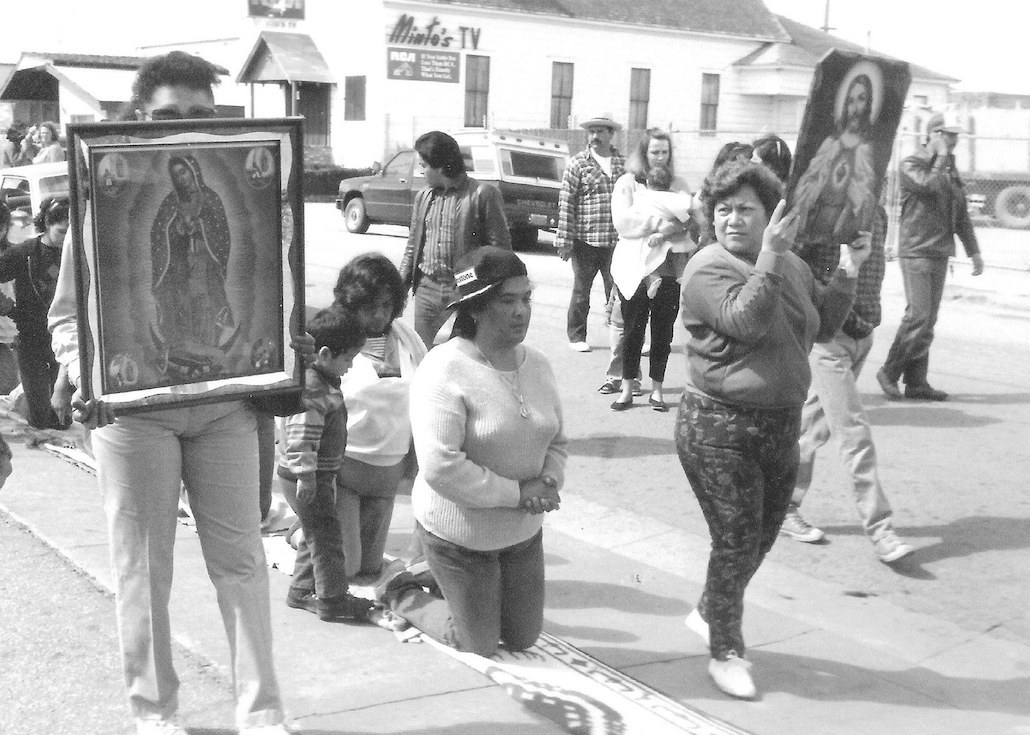
Cannery workers in Watsonville, California march on their knees from the plant gates to a Catholic church during their eighteen-month strike in the late 1980s.
Barry Eidlin’s essay on “rank-and-file strategy” tackles the question of left activism in the workplace and attempts to place it in the context of long-term revolutionary strategy. It should go without saying that any serious socialist movement needs to engage directly with workplace struggles, and not merely in a supportive capacity. The question is how, with what expectations, and with what strategic ends in mind.
I have some specific issues with Eidlin’s essay, but what is perhaps of more concern (to me, at least) is what it does not say. What follows is less a rebuttal than an attempt to fill in the blanks.
Eidlin’s rank-and-file strategy is counterposed to a pair of approaches he attributes to other tendencies on the Left. The first of these sees “workplace organizing as a venue for socialist cadre to engage in propagandizing for revolution.” The other involves attempts to “strengthen the left-labor link through alliances with the more progressive elements of the union bureaucracy.”