Miliband and the State
Ralph Miliband was right in urging socialists to leave the legacy of Leninism behind us. But achieving socialism will still require a change in the fundamental nature of the state.
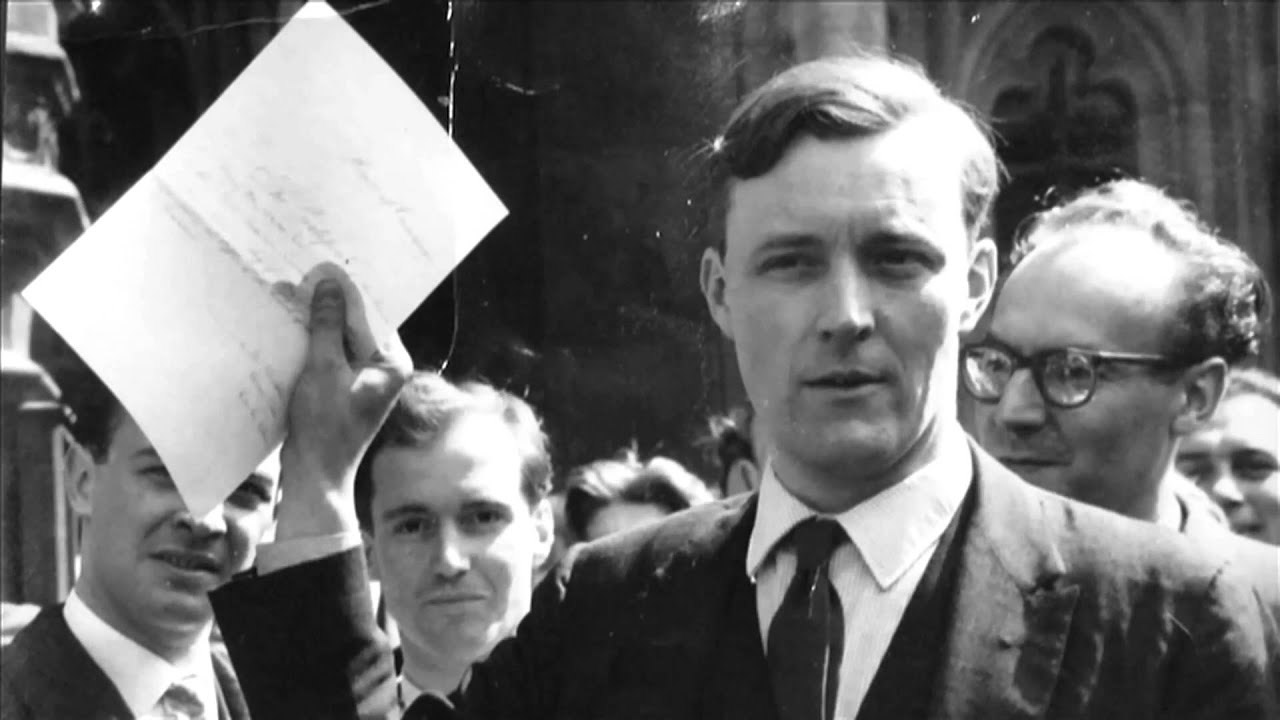
Ralph Miliband
Leo Panitch’s defense of the thought of the late Ralph Miliband — specifically his 1969 classic, The State in Capitalist Society — makes for excellent reading. The two most important things that Panitch emphasizes, and which deserve to be emphasized, are how Miliband was at pains to prove that social-democratic governance of capitalist society does not, and cannot, overcome capitalism’s inherent nature as a class-exploitative system nor the inevitability of capitalist economic crises, and that Miliband didn’t actually hold to an “instrumentalist” theory of the capitalist state. (This fallacy has been repeated so many times that Clyde W. Barrow had to write a painstakingly detailed piece demolishing this “artificial polemical construct.”)
Panitch also usefully stresses Miliband’s focus on the day-to-day fight under capitalism for pro-worker “structural reforms” — or, as André Gorz labels it in his 1964 book Strategy for Labor, “non-reformist reforms.” In Panitch’s words, Miliband understood that “radically intended socialist reforms must run up against certain limits.” He never claimed that structural reform was about, to quote Ed Rooksby, an “unbroken line of reforms leading from capitalism to socialism.” Contrary to the assertions of certain far-leftists, Miliband simply wasn’t a more left-wing version of the “parliamentary socialists” that he so sharply criticized in his other 1960s classic, Parliamentary Socialism. His emphasis on extra-parliamentary and multifaceted class struggle in Marxism and Politics (1977) makes this clear, even though he unfortunately calls his strategy “strong reformism.” His use of the term “reformism” — merely connoting that his outline of a path to socialism in capitalist democracies departed sharply from the literal civil war strategy of the early Communist International — was very much at variance with how, for example, Rosa Luxemburg understood that term.
Democratic Centralism
However, Panitch is simultaneously too strictly “Milibandite” in following his late mentor while at least slightly distorting one of Miliband’s views. He praises “Miliband’s critique of the concept of the dictatorship of the proletariat and of Lenin’s democratic centralism.” Where democratic centralism is concerned, Miliband makes clear in Marxism and Politics that he’s at least aware that Lenin’s critics of 1904, Luxemburg and Leon Trotsky, “tended to exaggerate very considerably what really separated them from Lenin and the ‘centralists.’” It was only during the Russian Civil War that Lenin embraced “dictatorial centralism” and even then he usually “did not try to make a virtue of what he believed to be required by dire circumstances.” Subsequent research has only made clearer the differences in the “early” and “later” meanings of democratic centralism. While there’s no “one size fits all” model of socialist organization, there’s also nothing innately wrong with “diversity in thought, unity in action” as a regulative ideal.