The Colombian Government Against the Campesinos
The Colombian government promised to invest in rural areas as part of the country's peace process. But the elite-friendly projects it's pushing are undermining the livelihoods of local residents — and threatening the peace process itself.
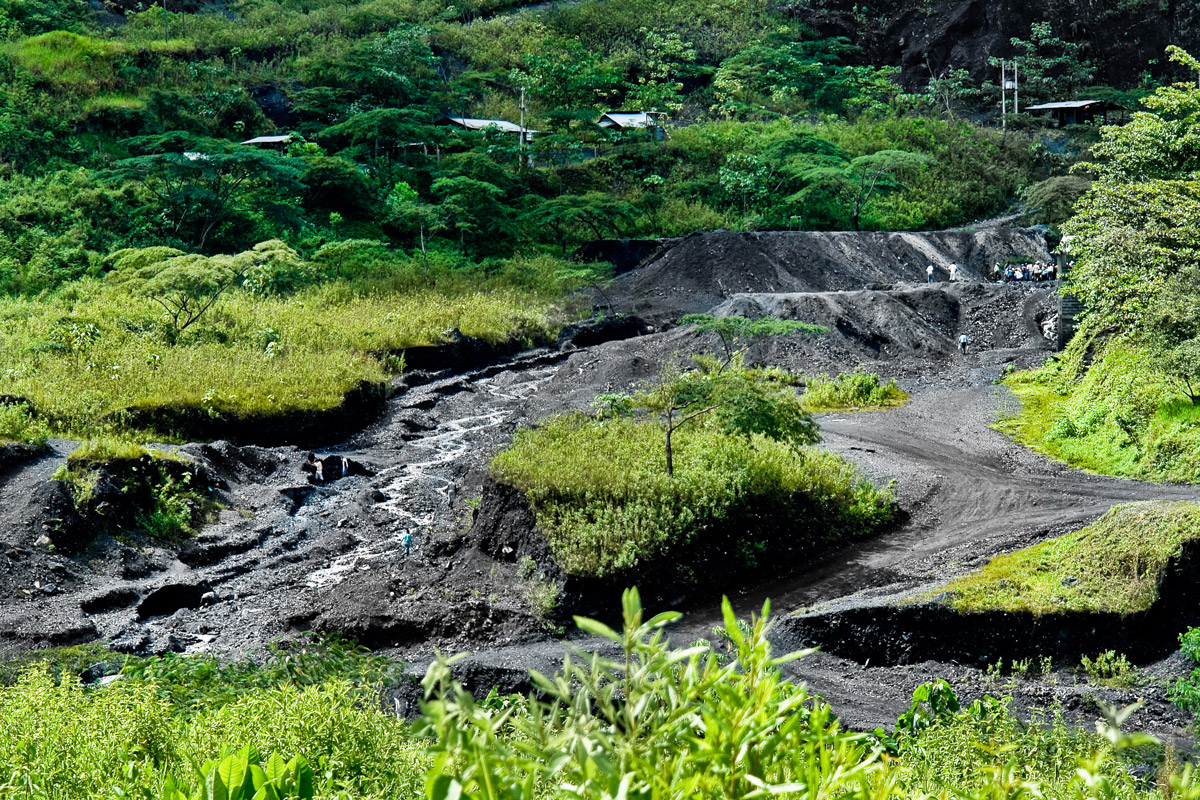
Open cut excavation in the mine of Muzo, Colombia. (Getty Images)
El Orejón, an isolated rural community in the northern Colombian department of Antioquia, is slowly emptying out. A few years ago, eighty-eight people lived on family farms on the valley walls above the Cauca river. Only forty-eight remain. The neatly cultivated plots of corn, beans, coffee, sugar cane, and yuca of the families still there stand out from the abandoned lands that the jungle is gradually reclaiming. But in contrast to the classic model of rural communities abandoned by the state, the Colombian government has invested significantly in El Orejón, a crucial area for Colombia’s peace process.
El Orejón was the site for the 2015 demining program that marked the first collaboration between the Colombian government and the Revolutionary Armed Forces of Colombia (FARC), before being chosen during negotiations of the peace accord as one of eleven hamlets in the municipality of Briceño to launch the pilot coca substitution program in 2017. Little more than two years ago, coca plants covered the hillsides above the river. Now the plants are gone, pulled out voluntarily by local campesinos seeking a transition to legal agriculture.
As El Orejón declines, a settlement across the river, complete with tennis courts and swimming pools, has emerged in the last ten years. This is the camp for workers who are constructing Hidroituango, the largest hydroelectric dam project in the history of Colombia, which lies directly below El Orejón. Public Enterprises of Medellín (EPM), the public-private partnership that is building Hidroituango, has recently come under fire for illegal and irresponsible construction practices with disastrous consequences. In May 2018, a tunnel built to divert river waters during the construction blocked up for weeks and then subsequently burst, leading to massive flooding that displaced 25,000 people in downstream communities.