Bernie’s Political Revolution Requires Radical Democratic Reform
The political revolution needs mass protest mobilization. But to be completed, it will also require a radical reconstruction of the United States’ undemocratic political institutions.
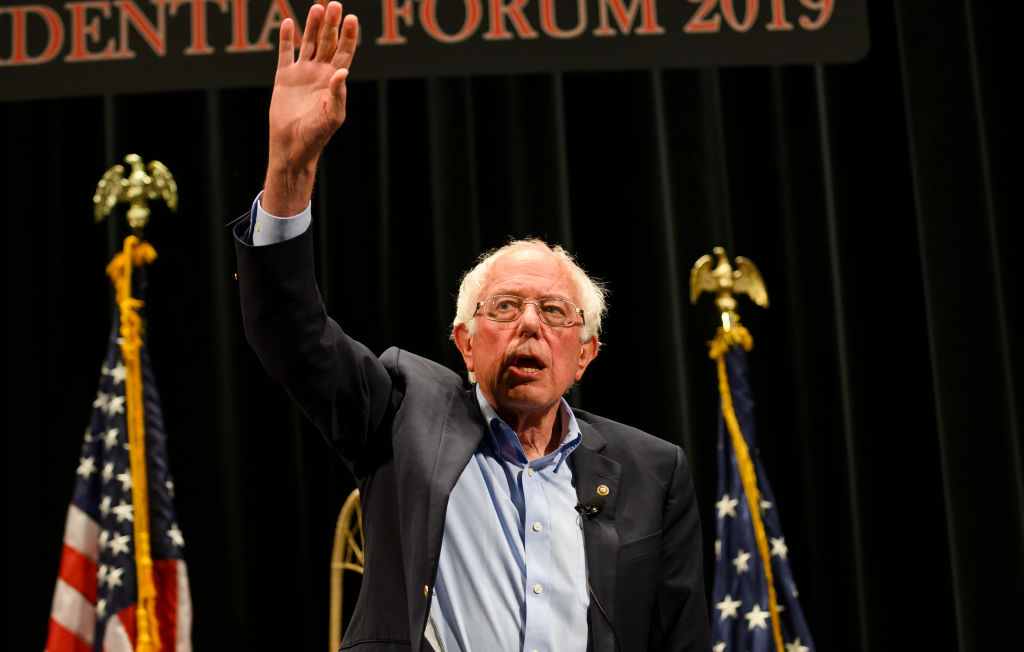
Democratic presidential candidate Sen. Bernie Sanders waves to the crowd after speaking at the Frank LaMere Native American Presidential Forum on August 20, 2019 in Sioux City, Iowa. (Stephen Maturen / Getty Images)
Bernie Sanders began his first campaign for president in 2015 with an extremely ambitious declaration: “Today, we begin a political revolution to transform our country economically, socially, politically, and environmentally.” Four years later, Sanders has gone from a largely unknown outsider to the most popular politician in the country, a genuine figure of the Left who stands a realistic chance of winning the White House in 2020.
People across the country, not just Vermonters and progressives, know who Bernie is now. But do we have a clearer sense of what he means when he calls for a political revolution in the United States?
The answer is yes and no. “Political revolution” is still something of a floating signifier for Bernie’s insurgent, antiestablishment brand of politics rather than for any specific program or vision for a new political order. The closest he gets to defining the concept is when he speaks of the need for millions of ordinary people to mobilize and confront the entrenched power of the billionaire class, which will fight tooth and nail to combat Medicare for All, tuition-free public higher education, and all of his other signature issues.