Freedom of Speech for Palestine Solidarity Activists
Defenders of Israel’s human rights abuses frequently attack critics for supposedly suppressing freedom of speech. But as the recent controversy at Williams College shows, it’s Palestine solidarity activists who face the highest risks when they speak out.
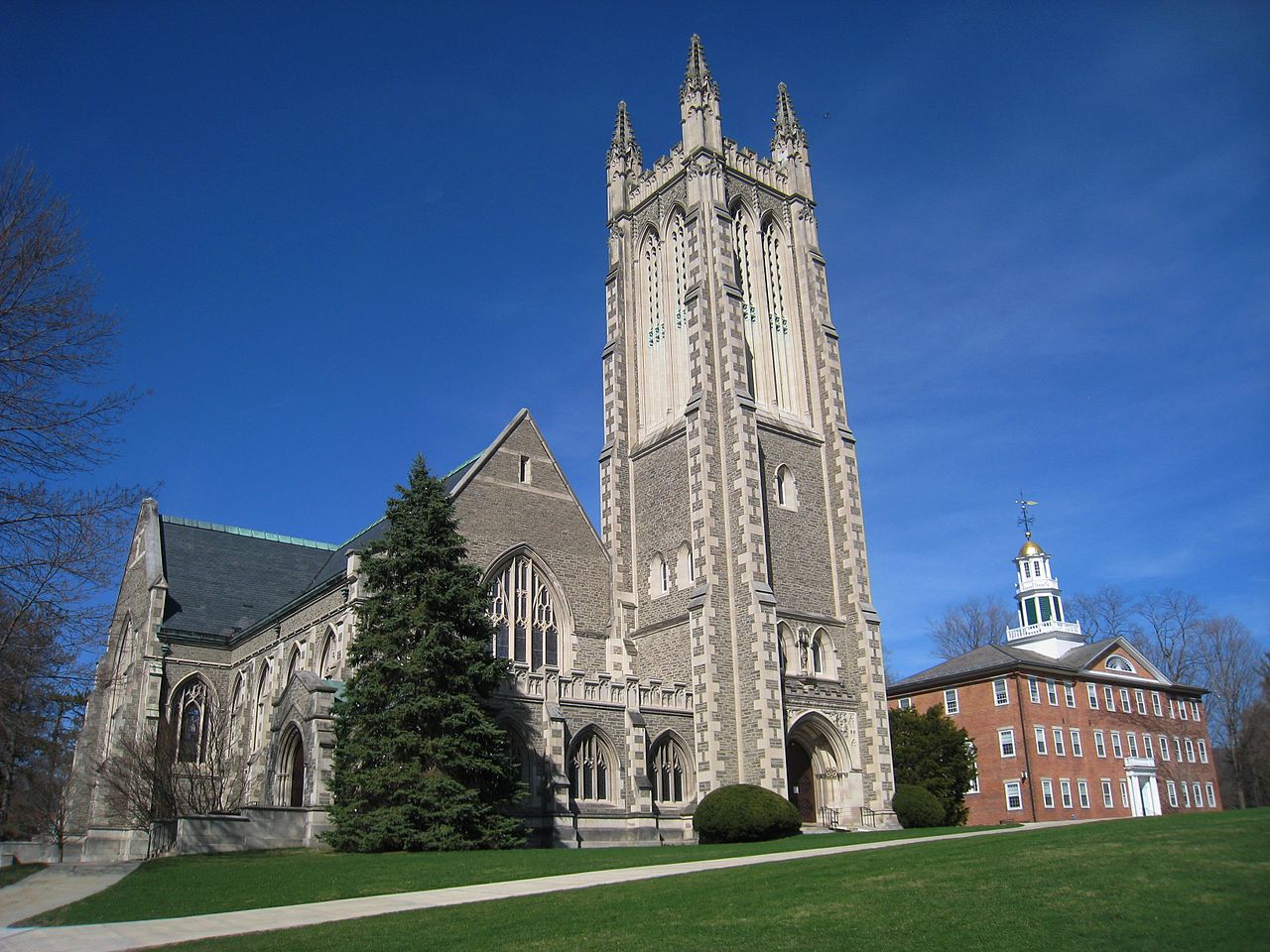
Thompson Memorial Chapel exterior view at Williams College, Williamstown, Massachusetts, 2008.Daderot / Wikimedia
The US Department of Education opened an investigation against Williams College in Massachusetts for discrimination after student government refused to grant a student group, the Williams Initiative for Israel (WIFI), official status. The media response has been hysterical: within a few weeks of the decision, Breitbart, Inside Higher Ed, the Boston Herald, and Ben Shapiro’s website the Daily Wire had all published articles accusing the college of suppressing free speech.
As one of the student activists involved in organizing against this group, I have seen firsthand how the outrage machine around Israel is able to turn seemingly any criticism of the country’s government, no matter how small, into a national controversy. Shortly after the decision, I found myself quoted in Forbes; and outlets tied the remarks I made in my student newspaper to those by Rep. Rashida Tlaib. (My point, not all that extreme, was that Israel receives so much military aid from the United States that the creation of student groups to come to the country’s defense is unnecessary.) It speaks volumes to the fragility of advocates for the state of Israel that college students are now as threatening to them as sitting members of Congress.
On campus, the debate was far more limited than the press made it seem. No one ever considered stopping WIFI from inviting speakers, holding meetings, or otherwise expressing their views. Many of us, however, had issues with WIFI potentially receiving financial support from student government, considering this money comes directly out of students’ pockets through a Student Activity Tax. Moreover, WIFI repeatedly refused to say whether or not they would accept money from lobbying groups like AIPAC, who they had been in contact with previously, or if they would use students’ money to invite extremist, pro-Netanyahu speakers to campus. WIFI’s fig leaf throughout the entire process that they were merely interested in supporting the State of Israel, politics notwithstanding. Student government was unconvinced: how could it be moral to fund and legitimize a group whose express intention is to support a state that, as much now as historically, has been responsible for the killing and forced expulsion of Palestinians?