Chile’s Nationwide Teacher Strike Has Thousands Taking to the Streets
Eighty thousand public school educators in Chile are out on an indefinite strike. Their target is the country’s neoliberal education system — a cruel legacy of the Pinochet dictatorship that overthrew Salvador Allende.
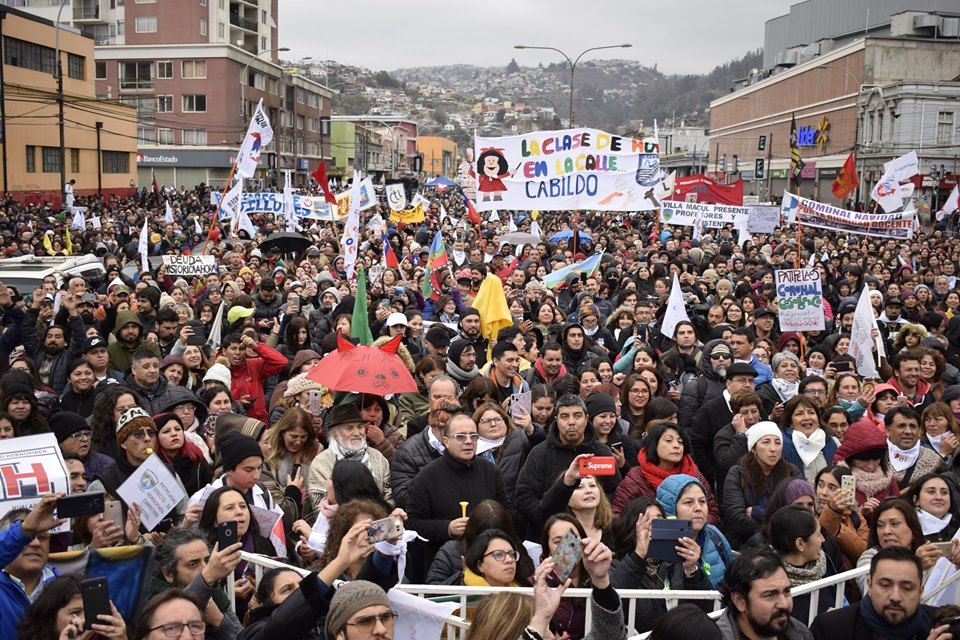
A crowd gathers outside the Chilean National Congress in defense of public education on June 11, 2019. Colegio de Profesores de Chile / Facebook
Six weeks ago, the president of the Colegio de Profesores de Chile (CPC) announced an indefinite strike after the government “shut the door” on negotiations over demands to end the precarious working and learning conditions in the country’s public schools. The union, which represents all of Chile’s public school educators, estimates that more than eighty thousand teachers have adhered to the strike.
Since then, the CPC has called for a series of mass demonstrations that have mobilized hundreds of thousands of students, teachers, and workers to Chile’s streets. As protests escalate, and 1 million students continue to be outside of class, history appears to be repeating itself for conservative president Sebastián Piñera’s administration, which entered a crisis of legitimacy during his first government in 2010, also as a result of student and teacher unrest.
Open Wounds
As with most political movements in Chile today, this situation has its roots in the military dictatorship of Augusto Pinochet. And while Pinochet’s military junta overturned the democratic gains made under Allende, the center-left alliance called the Concertación negotiated with Pinochet to ensure that the regime’s neoliberal pillars remained intact during the “transition to democracy.”