Tiffany Cabán Will Put the System on Trial
District attorneys usually wield their power against working people. If Tiffany Cabán wins election for Queens district attorney tomorrow, she’ll use it to fight mass incarceration.
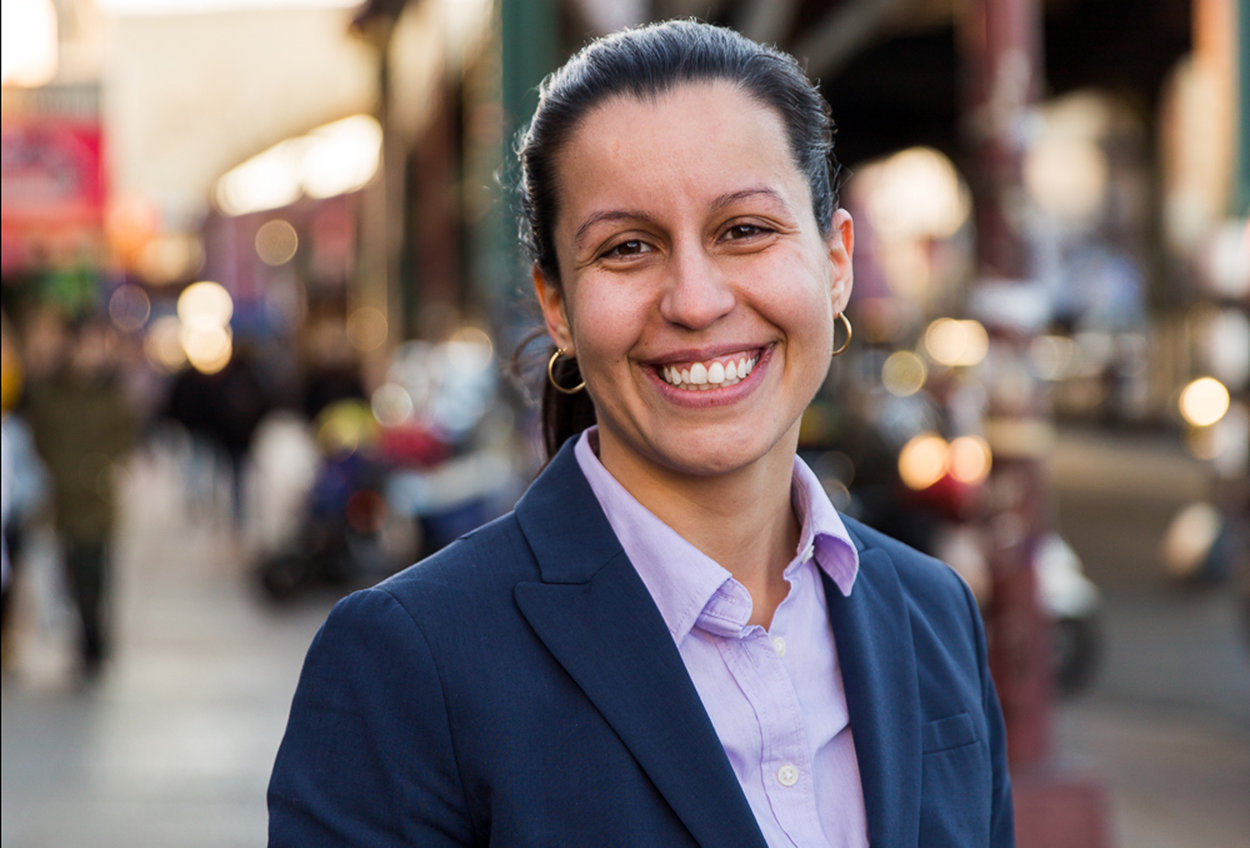
Tiffany L. Cabán.Caban for Queens
Nearly 2.3 million people live in American cages. In absolute and per capita terms, the United States incarcerates more people than any other country on Earth. There are many groups responsible for mass incarceration: politicians, judges, and police officers played their parts. But one actor is uniquely responsible: the American prosecutor. As detailed in the books Charged and Arbitrary Justice, prosecutors can exert functionally unchecked control over those in their jurisdiction who come into contact with the criminal justice system, who, as we know by now, are disproportionately poor, black, and brown.
Prosecutors are immune to lawsuits, even in cases where they falsify evidence and coerce witnesses. Most are elected, theoretically making them accountable to the public. In practice, the public doesn’t have a choice: 72 percent of prosecutors ran unopposed in 2016. Prosecutors are only required to turn over evidence to the defense that would materially affect the jury’s decision in the case, a nearly impossible standard for the defense to prove.
Prosecutors have wielded disproportionate power for over a century, but the introduction of mandatory minimum sentencing in the 1970s and the rise of the plea bargain shifted even more power towards prosecutors and away from judges, juries, and defense attorneys. Prosecutors choose what charges to bring against a criminal defendant. If a jury finds the defendant guilty of a crime with a mandatory minimum, the judge cannot sentence less time than what is required by law, regardless of mitigating circumstances.