Solidarity With Glenn Greenwald
Last week, the Intercept exposed Lula’s persecution for the farce that it was. Now journalist Glenn Greenwald, his family, and the Intercept are under attack by Bolsonaro and his followers. They deserve our solidarity.
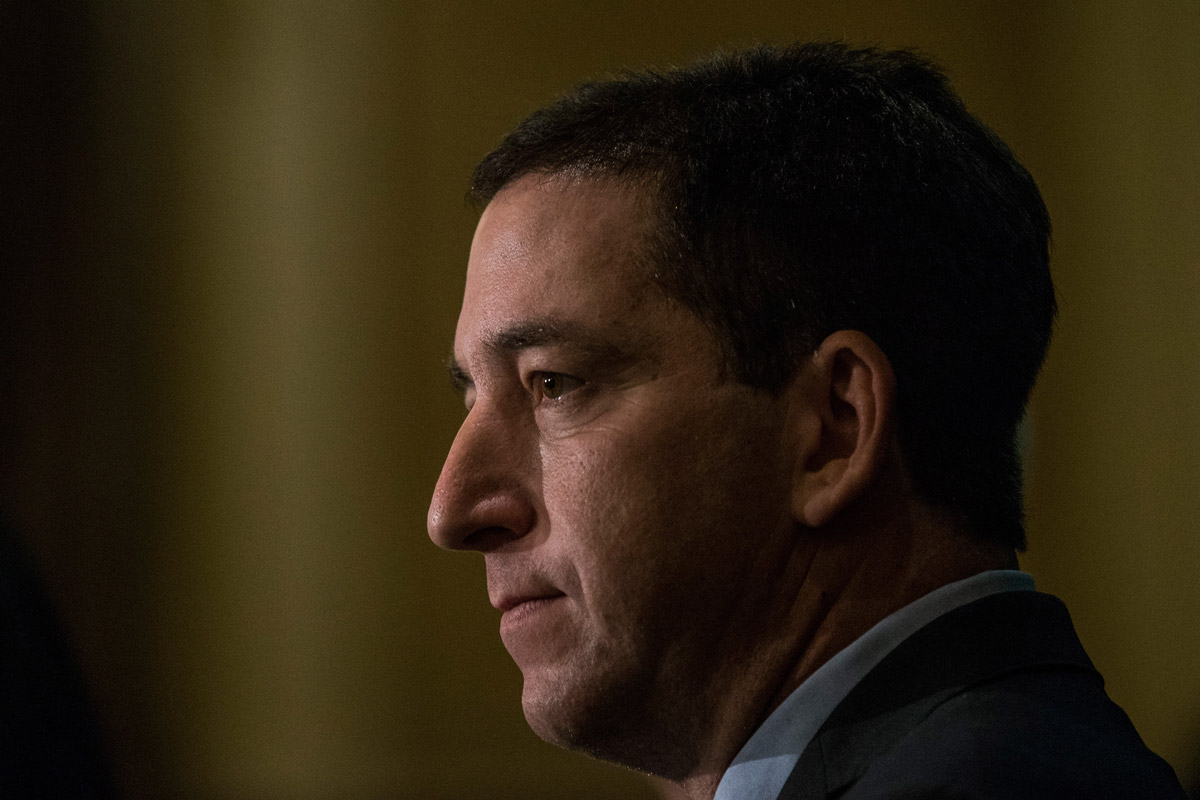
Glenn Greenwald accepts the George Polk Award for National Security Reporting on April 11, 2014 in New York City (Andrew Burton / Getty Images).
Journalist Glenn Greenwald is once again rocking international politics by exposing state violations of civil liberties. This time, his reporting targets the highest levels of Brazilian president Jair Bolsonaro’s cabinet. In the United States, Greenwald is best known for publishing whistleblower Edward Snowden’s disclosure of illegal National Security Administration surveillance programs in the Guardian in 2013. At the time, several Republican Congressmen called for Greenwald’s prosecution, including Mike Rogers, then chair of the House Intelligence Committee. This time around, political hacks in Brazil, where Greenwald has lived for years, are calling for his head. This has resulted in “grotesque” threats against not just Greenwald’s life, but those of his husband, the leftist congressman David Miranda, and their adopted children.
Why? On June 9, Greenwald and a team of reporters — Andrew Fishman, Rafael Moro Martins, Leandro Demori, and Alexandre de Santi — at the Intercept published two blockbuster articles based on leaked communications between lead prosecutor Deltan Dallagnol and then-presiding Judge Sergio Moro in a sweeping anti-corruption campaign named Operação Lava Jato (Operation Car Wash).
While Lava Jato filed charges against powerful politicians across the political spectrum, the conviction and ten-year sentence handed down to former president Luiz Inácio Lula da Silva was Moro’s crown jewel. Lula is by far the most popular leader of the Workers Party (PT), who rose up from the ranks of the metal workers union to rally millions in the late 1970s and early 1980s against the generals who ran Brazil. He was elected to two terms as president between 2003 and 2010, during which he promoted programs that reduced extreme poverty and expanded education opportunities for working-class students.