A Regime Divided
- David Broder
Hundreds of thousands have taken to the streets of Algeria to protest authoritarian president Abdelaziz Bouteflika. Yet the demand for change also reflects cracks within the ruling regime.
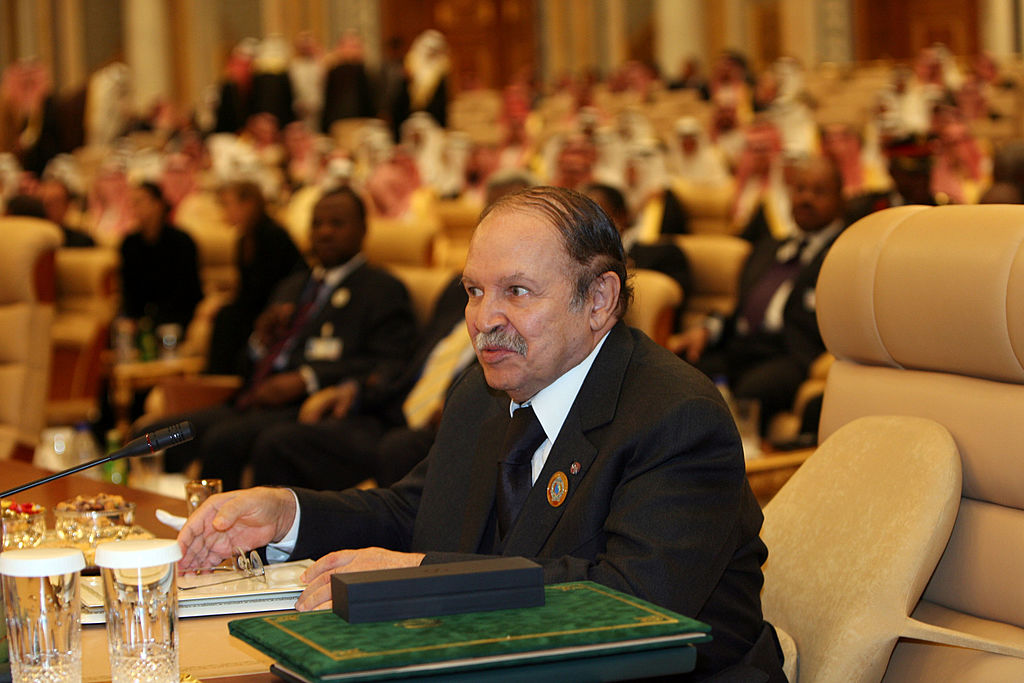
Algeria’s President Abdulaziz Bouteflika attends the closing of the Third OPEC Summit , November 18, 2007 in Riyadh, Saudi Arabia. Salah Malkawi / Getty
The political crisis today shaking Algeria did not fall from the sky. After a long crisis in the ruling regime, everything now suggests that the current political order is reaching its end. Indeed, president Abdelaziz Bouteflika’s promises of constitutional reform indicate the authorities’ own awareness that their regime no longer corresponds to the interests of the dominant forces in Algerian society. Yet they are also mounting a final bid to maintain control of the now-inevitable reform process.
Indeed, if the turning point is now upon us, many questions remain unresolved. It is unclear if this change will indeed, come, or if the country will again fall under the control of a dictatorship. And it is also unclear how exactly the change will take place: something which remains hard to predict in a fast-moving situation. There may be blood and tears, or else a reform without too much upheaval and fallout. With Algeria in the balance, the way has been opened to a coup de force within the regime, change through popular mobilization — or, perhaps, both at once.
Origins of the Crisis
The onset of the regime’s crisis was already apparent in a crisis of representation, which first took concrete form in signs of mass popular disaffection at the ballot box. According to the (systematically inflated) official turnout figures, only 50.7 percent of eligible voters took part in the most recent presidential contest in 2014, as against 74.6 percent in 2009. The regime’s candidate Abdelaziz Bouteflika had lost some 4.5 million votes between the two elections.