A Women’s Strike for the 99 Percent
On March 8, 2018, millions of women across Spain struck for International Women’s Day. The nationwide shutdown showed how we can turn our personal hardships into a powerful collective resistance.
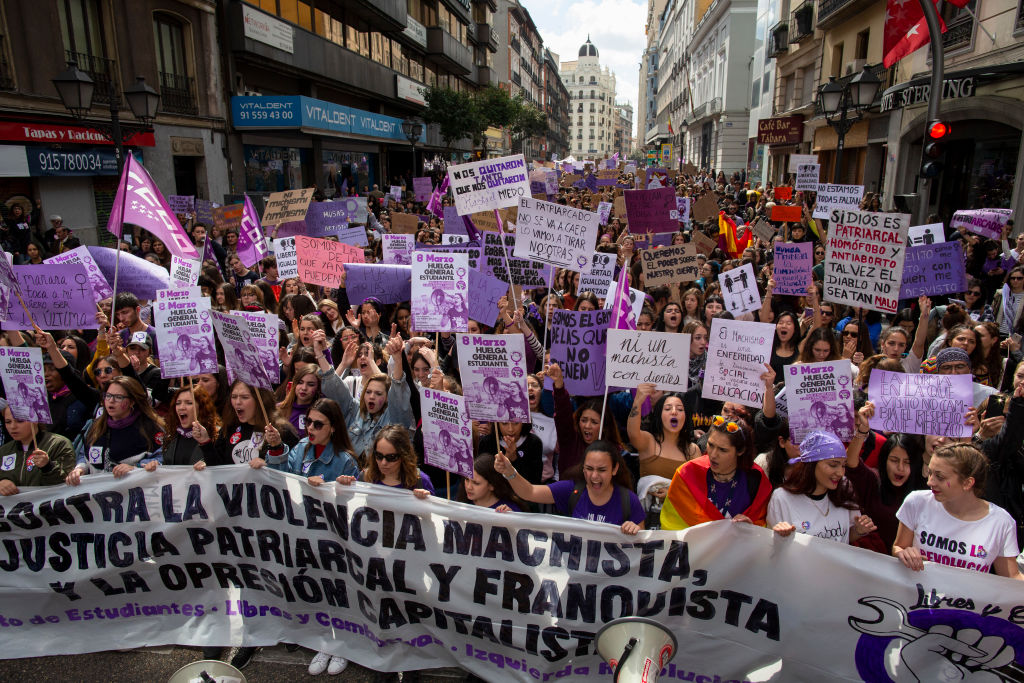
Students protest along the streets during the International Women’s Day on March 08, 2019 in Madrid, Spain.Pablo Blazquez Dominguez / Getty
On March 8, 2018, millions of women across Spain took to the streets for International Women’s Day. Pickets formed at daybreak, from offices to banks and supermarkets. Traffic was cut off in the main thoroughfares, posters were put up everywhere, and in the evening a flood of feminists filled the streets in multiple cities. There were 500,000 demonstrators in Madrid, similar numbers in Barcelona, and hundreds of thousands of others across smaller cities like Vigo and Seville.
The millions thus mobilized were protesting the patriarchal violence that is widespread in all parts of society, from interpersonal relations to the sphere of paid employment (and domestic labor), the economy and politics. This was one of the biggest mobilizations that the country had seen in recent years, and indeed the Women’s Day strike in Spain enjoyed real international resonance.
The aim was to bring everything to a stop — not just businesses, but also care work and consumption. This allowed the participants to give a collective expression to what would otherwise seem like personal hardships, bringing the feminists’ call to all corners of Spain. This also had another key effect, in freeing the women’s struggle of the negative connotations that conservatives have imposed upon it and giving it the unstoppable strength that comes from making our demands “common sense.”