The Cunning of Unreason
Critics of populism lament the rise of “emotion-driven” politics. But instead of asking why politics has become so “irrational,” we should ask why people are so angry in the first place.
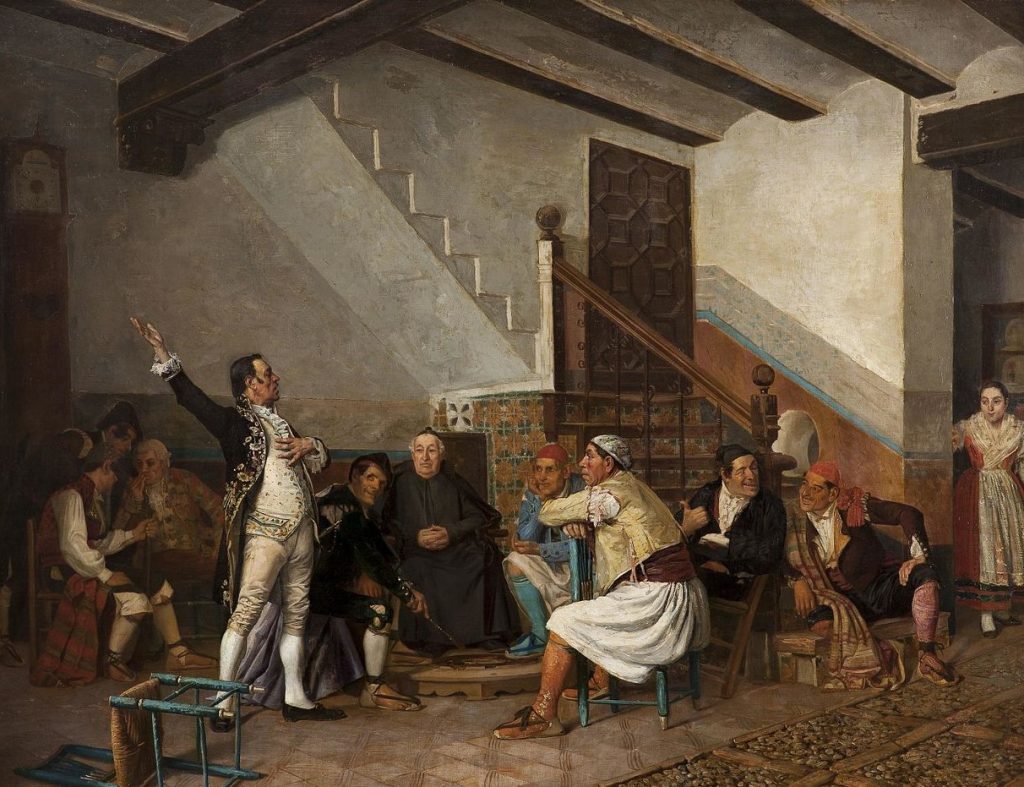
“The Political Windbag” by Bernardo Ferrándiz, 1866.
In October 1949, the German philosopher and social scientist Max Horkheimer boarded a plane for Germany. It had been more than fifteen years since he last set foot in his home country. Horkheimer had emigrated to America in 1934, after the offices of his employer — the Frankfurt Institute for Social Study — had been closed down by Nazi squads. In the meanwhile, the philosopher’s mother country had been ravaged by twelve years of Nazi rule.
In his travel bag Horkheimer carried notes for a book he had been working on in American exile, published as the Eclipse of Reason in 1947. In a foreword to the book, the philosopher sought to explain his intentions for writing. “Whenever nature is exalted as a supreme principle and becomes the weapon of thought against thinking,” Horkheimer wrote, “thought manifests a kind of hypocrisy, and so develops an uneasy conscience.” Science and expertise, he saw, had lost their luster to a humanity threatened with nuclear apocalypse. But neither did Nazis’ “destruction of reason” offer a desirable alternative. Humanity thereby found itself in a double-bind. On the one hand, more facts could not lead to increased freedom and only furthered “man’s domination over man.” On the other hand, the Nazis’ “flight towards feeling” would remain powerless in an increasingly administered world run by experts and functionaries. Progress had ended in a cul-de-sac.
Reason’s Decline
There are notable similarities between Horkheimer’s work and a recent book on the topic of “politics” and “emotion” published with Norton press. In his Nervous States: Democracy and the Decline of Reason (2019), the English sociologist William Davies wages an explanation of the ten-year involution of the liberal order, and the rise of “emotions” as a register in our political life.