Assessing Deng Xiaoping
Deng Xiaoping was one of the most important Communist leaders of the twentieth century. Celebrated by the West for his pro-market reforms, leftists should be more skeptical of his accomplishments.
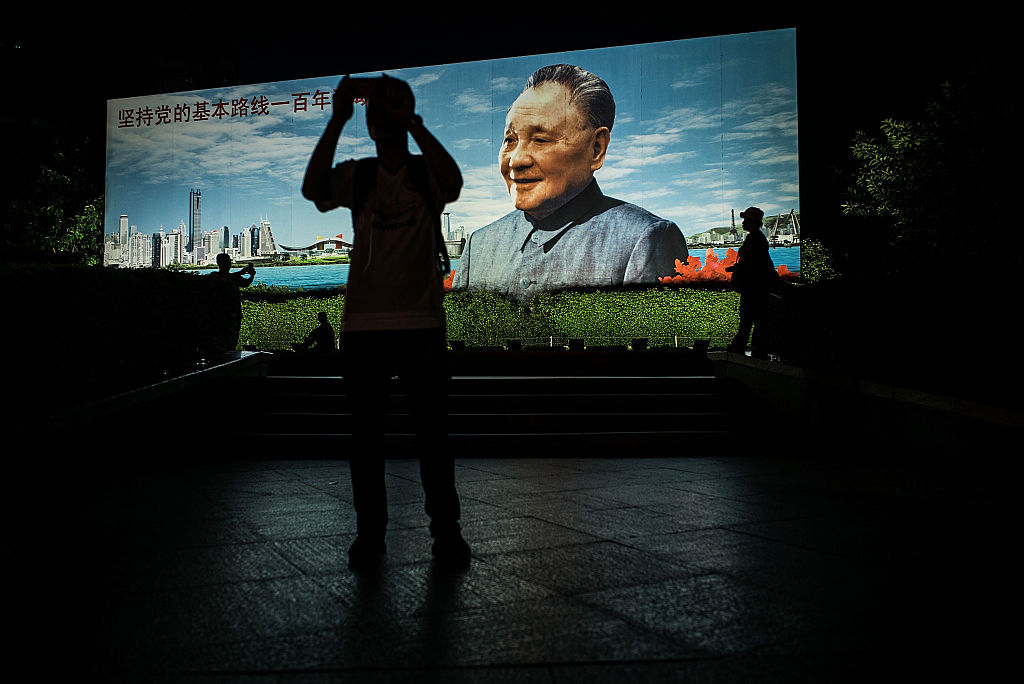
A billboard of Deng Xiaoping on April 3, 2016 in Shenzhen, China. Lam Yik Fei / Getty Images
Deng Xiaoping was Time magazine’s favorite communist, named not once but twice (in 1978 and 1985) as Man of the Year. For many leftists, however, he’s the man who brought the market to China, helping to build the system of state-managed capitalism that reigns in the country today.
Who was Deng Xiaoping, and how should we assess his legacy? Two recent books, Deng Xiaoping, A Revolutionary Life and Deng Xiaoping, The Man Who Made Modern China, by veteran and distinguished commentators on Chinese communist history, accept that Deng changed China and the world after Mao’s death but take a longer view on his career, questioning his characterization as a moderate reformer and emphasizing his complexity and culpability as well as his achievements. They are Deng’s first complete biographies in the West. Expertly researched and important new sources on Deng’s role in the Chinese revolution, they nevertheless have serious shortcomings.
The Early Years
Deng was born in 1904. His father, a landowner, had him schooled in a modern college in the tumultuous 1910s, when he drank in the anti-imperialist spirit. At his father’s burial, a red-gold snake slid from the newly dug grave, considered a portent.