The Rise of Community Control
The New York Board of Education and teachers unions' refusal to fight racism in public education was responsible for the 1968 Ocean Hill-Brownsville crisis, not Black Power.
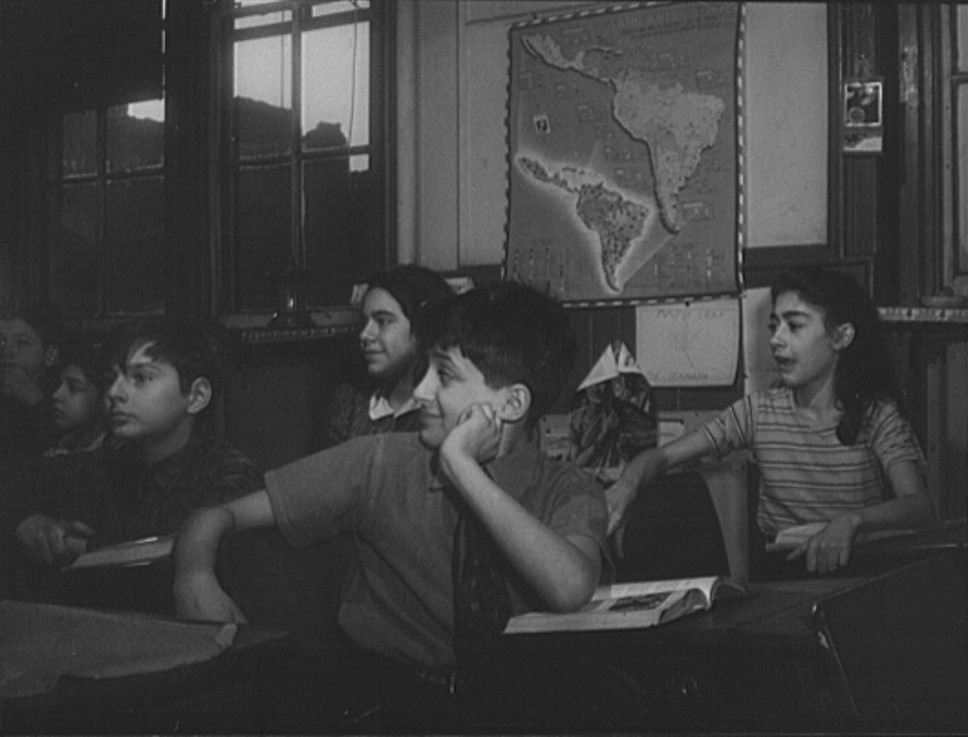
Reading class in Public School Eight on King Street, New York, NY, January 1943.Library of Congress
A great deal has been written over the last fifty years about the 1968 New York teachers’ strike. A major argument among some who have examined this episode is that such conflict was rooted in the politics of the 1960s.
Writer Jonathan Kaufman maintained that conditions had changed for blacks and Jews in the 1960s. “Jews were unhappy with the rising militancy and anti-white sentiment emanating from the more militant parts of the civil rights movement. According to Kaufman, the “rising black militancy was demanding power, real power.” Kaufman maintained that black militants, such as Rhody McCoy, head of the Ocean Hill-Brownsville school district, community leader and Black Power advocate Sonny Carson, and Les Campbell of the Afro-American Teachers’ Association, an “openly anti-Semitic” organization, were at the root of the problem in Ocean Hill-Brownsville.
Historian Joshua Zeitz argues that New York City black activists missed the mark. Instead of addressing those who were responsible for neighborhood segregation such as those in banking and real estate, parent and community activists turned on teachers. “As grassroots activists began gathering momentum for a community control scheme, they grew increasingly casual in their use of such terms as ‘educational genocide’ and intellectual ‘colonialism,’ reflecting a growing consensus among movement leaders that their cause was at one with anti-colonial struggles in the ‘third world.’ Such vitriolic attacks on a predominantly Jewish teaching force were bound to result in a conflagration, as indeed it did.”