Getting the Common Goods
The North Carolina teachers strike was the result of years of grassroots organizing. And they're not done yet.
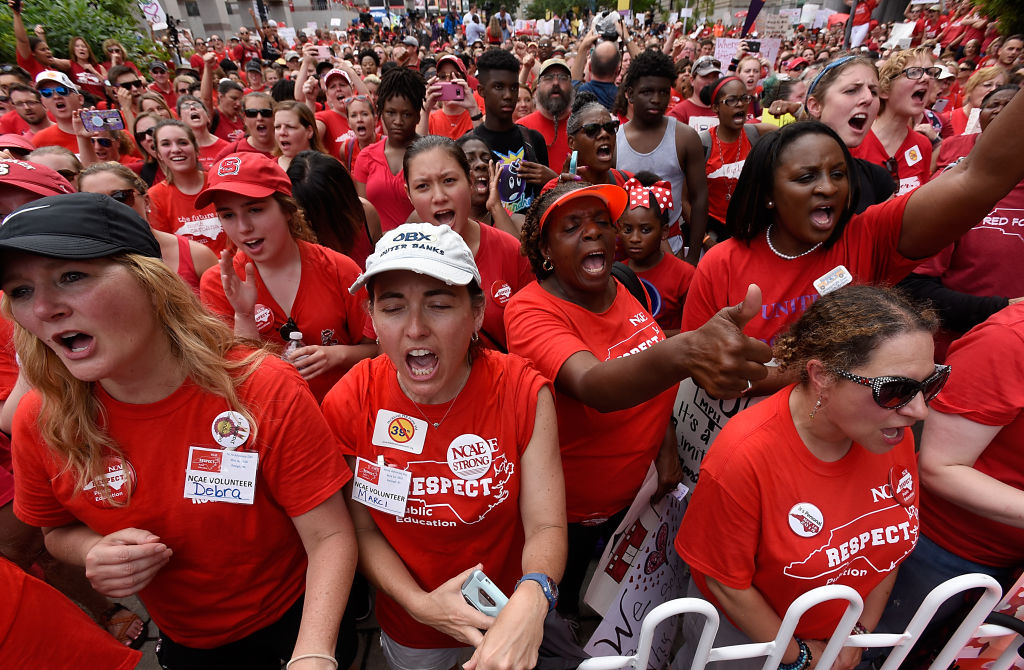
Teachers on strike on May 16, 2018 in Raleigh, North Carolina. Sara D. Davis / Getty Images
One Wednesday in late April, Kristin Beller, a kindergarten teacher and president of the Wake County branch of the North Carolina teachers’ union, called her school’s central office to check on the number of personal days teachers had requested that week. It was three hundred, a normal amount. When she called back on Monday, there were eight hundred requests. The next day there were 1,200, at which point she was told the office was no longer allowed to speak with her.
Three weeks later, on May 16, the first day of the legislative session, around thirty thousand teachers were marching on Raleigh, each having requested a personal day to attend the protest. The annual “advocacy day” held by the North Carolina Association of Educators (NCAE) typically draws about four hundred people. This year, so many teachers requested the day off that superintendents in forty-two of 115 districts from counties across the state were forced to close schools.
With school out for summer, it might seem like the teacher strike wave has petered out. But what happened in North Carolina jumpstarted a process that lasted far beyond the one-day walkout.