No Direction Home
The far right has made breakthroughs in old Communist heartlands across Europe. A new memoir blames this on the slow and painful erosion of class politics.
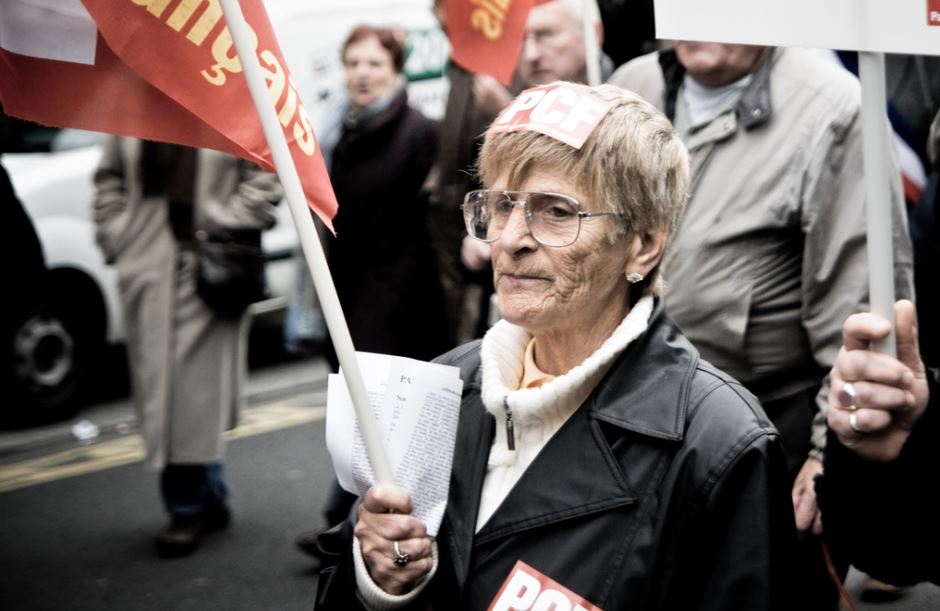
A PCF demonstration in Paris, France in 2007. Philippe Leroyer / Flickr
What is it that drives someone to escape the poverty of their childhood? Social and material necessity perhaps, or the urge for reinvention. But for Didier Eribon, it also involved a degree of shame and disgust.
Eribon was born in 1953 and grew up in a housing estate on the outskirts of the French city of Reims. He was the first in his family to complete secondary education. He moved to Paris aged twenty to study philosophy, eventually becoming a journalist, academic, and biographer of Foucault. Appalled by his family’s homophobia and parochialism, he barely kept in touch with them and didn’t attend his father’s funeral.
His father’s death, however, did profoundly affect him. The day after the burial, Eribon visited his mother for the afternoon. Together, they looked at old photographs that starkly depicted the abject poverty of his childhood. This moment drove him to write his deeply analytical memoir. In it, he reflects that it was not just his homosexuality that drove him towards a middle-class intellectual milieu, but a strong desire to escape from his family’s class background.