You Can’t Get By On $7.25
How bad is the housing crisis? Even the cheapest rental units are usually out of reach for low-income workers.
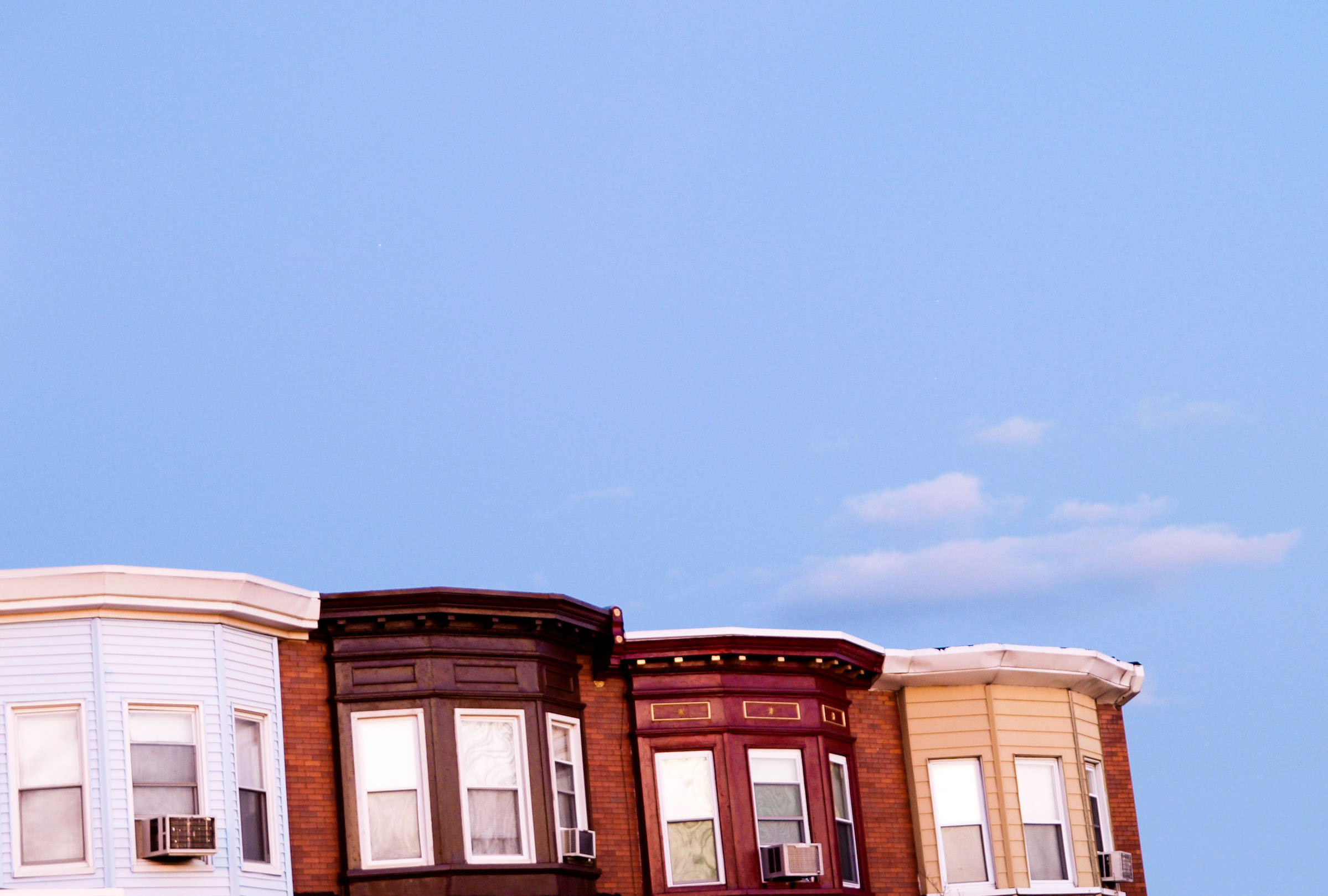
Rowhouses in Baltimore, MD. Bill Mill / Flickr
The National Low Income Housing Coalition (NLIHC) released its annual report about housing affordability last week. The headline is that housing is unaffordable to minimum-wage earners in every state in the country.
NLIHC defines affordability as being able to pay the rent of the fortieth percentile rental unit with 30 percent of the minimum wage. So, if the minimum wage is $7.25 (as it is federally), then the annual wage for a minimum wage earner is $15,080, and the monthly wage is $1,256.67. Thirty percent of $1,256.67 is $377. Thus, for housing to be affordable in an area under this measure, the fortieth percentile unit would need to rent for $377 or fewer dollars.
The peculiarities of this measurement always raise a few eyebrows from those who pay close attention. This year, Jodi Beggs was among those calling foul. Why does the NLIHC use 30 percent of the minimum wage as the barometer of affordability? Why does it use the fortieth percentile rental unit when you would expect a minimum-wage earner to live in, say, the tenth percentile unit?