Why Do Workers Strike?
Think conservative workers won’t strike? Think again. History shows it’s not workers’ ideas that count, it’s the conditions they face on the job.
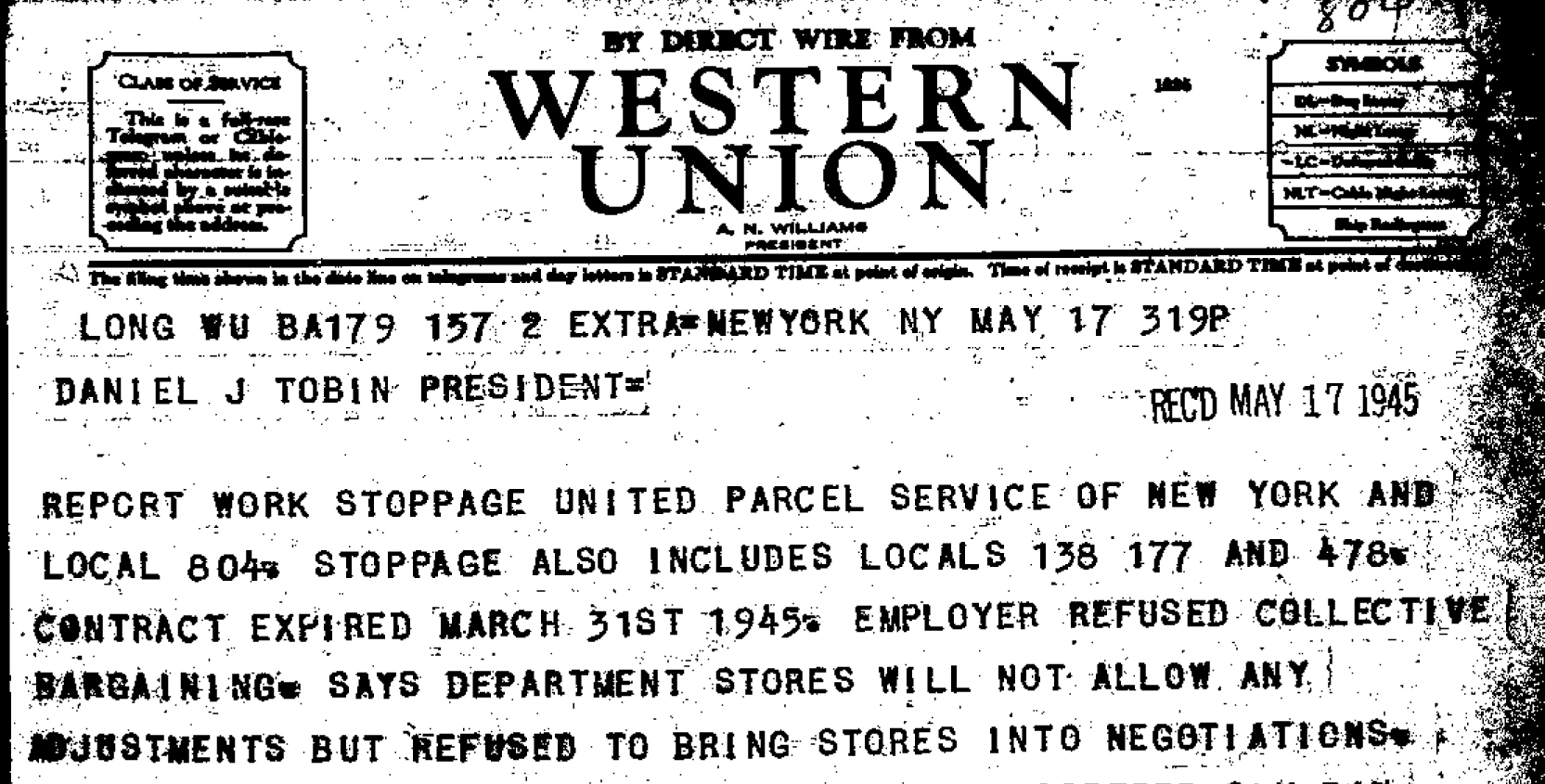
A 1945 telegram to IBT president Tobin, explaining a stoppage in violation of the no-strike pledge.Teamster Local 804
It is rare for history to provide so clear-cut and well-documented a contradiction. On the one hand, a majority of auto workers voted to sustain the no-strike pledge. On the other hand, a majority of auto workers went out on wildcat strikes.
It should be a fruitful source of analysis and understanding. But traditional social science cannot easily deal with this kind of contradiction. The facts strike a powerful blow against sociological surveys and academic views of consciousness. The UAW referendum was a pretty good version of a sociological survey — a simple statement of belief on a clearly stated subject. And yet, even while the survey was being made, the events belied the results of the survey. There had been some understanding that opinion surveys are static and their results cannot be projected too easily into the future. T. Lupton, for example, noted:
The interview is often useful as a means to ascertain attitudes, opinions, and beliefs, but it is not possible to proceed logically from statements about attitudes to descriptions of actual or probable behaviour. Attitudes expressed in an interview may not affect the choice made. Many choices involve a clash between attitudes stated with equal conviction in the situation of the interview.