Remembering the Saur Revolution
Forty years ago, communists took over Afghanistan hoping to bring modernization and social progress to the country. Were their sweeping reforms doomed to fail?
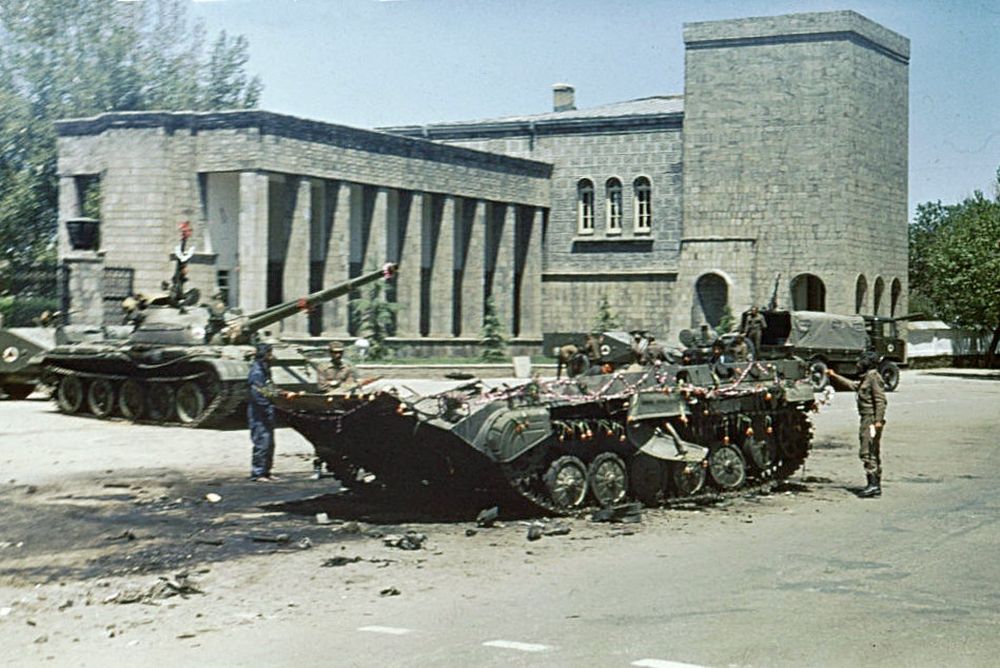
Day after Saur Revolution in Kabul, Afghanistan.Cleric77 / Wikimedia
Forty years ago, on April 28, 1978, Communists made a revolution in Afghanistan. My friend Tahir Alemi was one of them. He was a good man, kind and gentle, and he wanted to change the world.
Tahir was a lecturer in Pashto literature at the University in Kabul. He’d come a long way. His father was a small peasant in a village in Nangrahar, near the border with Pakistan. The family worked their own land, and had one sharecropper, so they were doing better than most. Tahir got to university, and into his job, through raw intelligence. He loved his father, and his brothers and his mother. But he had to set his face against his father’s values.
Afghanistan in the 1970s was a feudal country. Power lay not with urban businessmen, but with great landowners who lived in countryside forts. Sometimes there were two great lords in a village, sometimes one, and in some places one man dominated several villages. There were many middle peasants, men like Tahir’s father, with maybe one sharecropper, but still also working their own land.