The “Macedonia” Question
The naming dispute between Macedonia and Greece sounds trivial to outside observers, but it’s fueling right-wing nationalism in both countries.
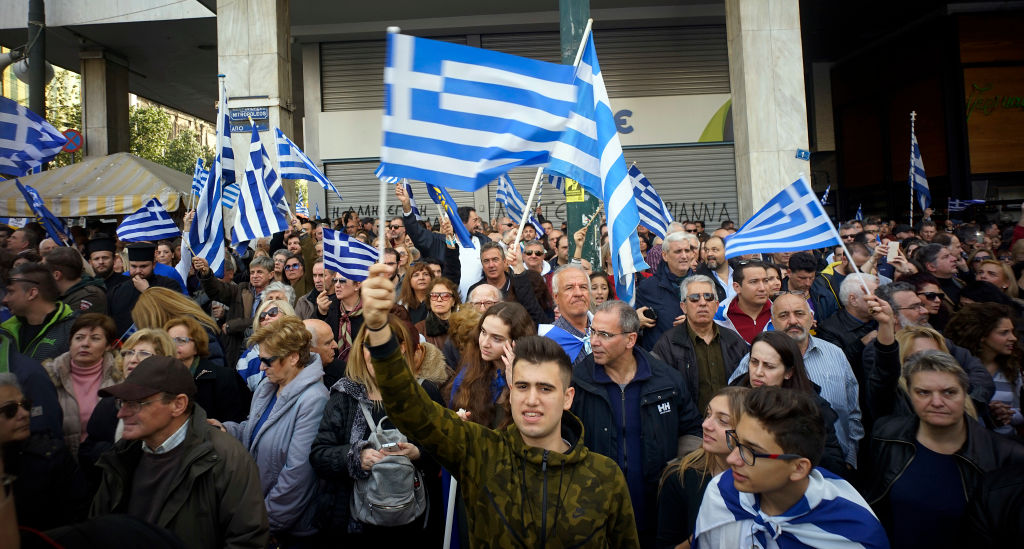
Demonstrators wave Greek national flags during a February 4, 2018 Athens protest over a a potential Greek compromise on its dispute with Macedonia over the former Yugoslav republic’s official name.Milos Bicanski / Getty
What’s in a name? Macedonia is a region in the north of Greece, the birthplace of Alexander the Great, an area of historical importance. It’s also the name of the Republic of Macedonia and of a region in Bulgaria. Millions of ethnic Greeks call themselves Macedonians and getting the republic to qualify its name has become a major cause of Greek nationalism. For its part, within the Republic of Macedonia, anti-Greek nationalism is being inflamed as well.
It sounds pedantic, but the “naming dispute” between Greece and the Republic of Macedonia is an often overlooked factοr in the last three decades of Balkans instability. Kept at a dormant state as long as the Republic of Macedonia was part of the Yugoslavia, the dispute erupted when, following the federation’s breakup, it declared its independence.
The collapse of socialism in Yugoslavia and in the neighboring Balkan countries — which covered almost all of Greece’s land borders — and civil unrest caused an influx of economic migrants from those countries. It fueled anxieties over Greece’s position in what was becoming a brutally transformed and highly inflammable area. Fears of the cursed “Balkan past” were coming to fore and the “naming dispute” took on new significance.