How the NYPD Gets Away With It
The Anna Chambers case has exposed the entrenched political power wielded by police.
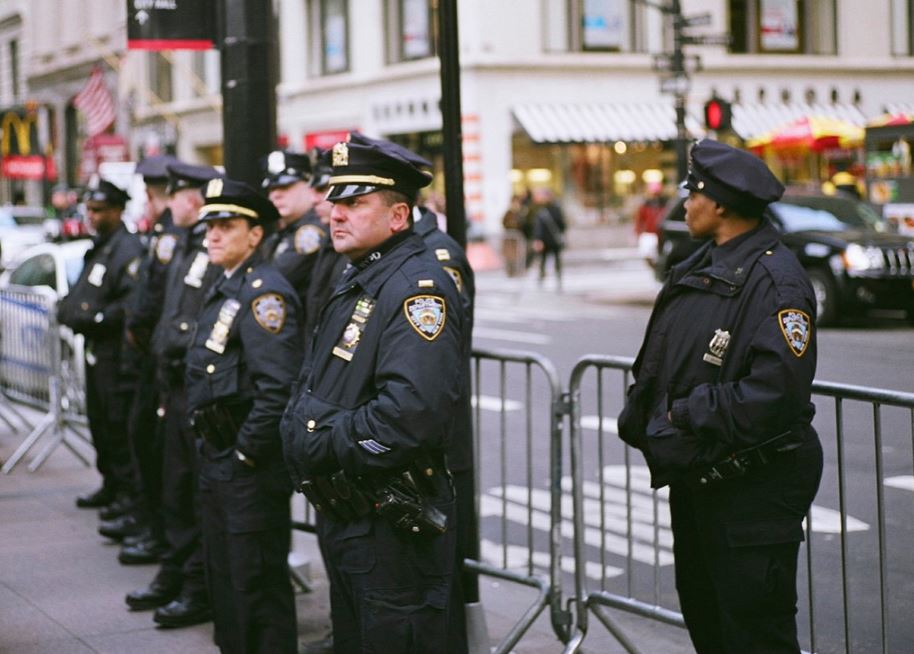
NYPD officers in New York. Jamie Kenny / Flickr
Last September, eighteen-year-old Anna Chambers was driving through South Brooklyn’s Calvert Vaux Park with two of her friends when they were pulled over by an unmarked police van. Two NYPD officers emerged from the van, justifying the traffic stop by simply citing that the park was closed for the evening. But when the officers approached Anna’s car, they demanded to search it for drugs.
The police officers allegedly found a small bag of marijuana in the car and confiscated pills from one of the two male passengers — but they only arrested Anna. The cops handcuffed Anna and reportedly drove her to an empty parking lot, where they raped and sexually violated her in the back of the unmarked van, concealed by its dark tinted windows. After assaulting the young woman, the NYPD officers — who’ve since been identified as Brooklyn South Narcotics detectives Richard Hall and Edward Martins — dropped Anna off on a street corner. Hall and Martins never processed the arrest at the precinct and never drafted a police report about the incident. If left to the judgment of the NYPD’s 60th Precinct in that moment, any evidence of the officers’ crimes would have been erased.
Instead, Anna went to the hospital later that night to seek treatment, where she was administered a standard sexual assault forensic exam, more commonly known as a “rape kit.” When Anna detailed what the two detectives had done to her earlier that evening, the hospital staff followed the standard procedure for responding to sexual assault: they reported it to the New York City Police Department.