About That Stock Panic
The stock market's panicked reaction to signs of wage growth shows just how weak the economy is — and how much it caters to the wealthy.
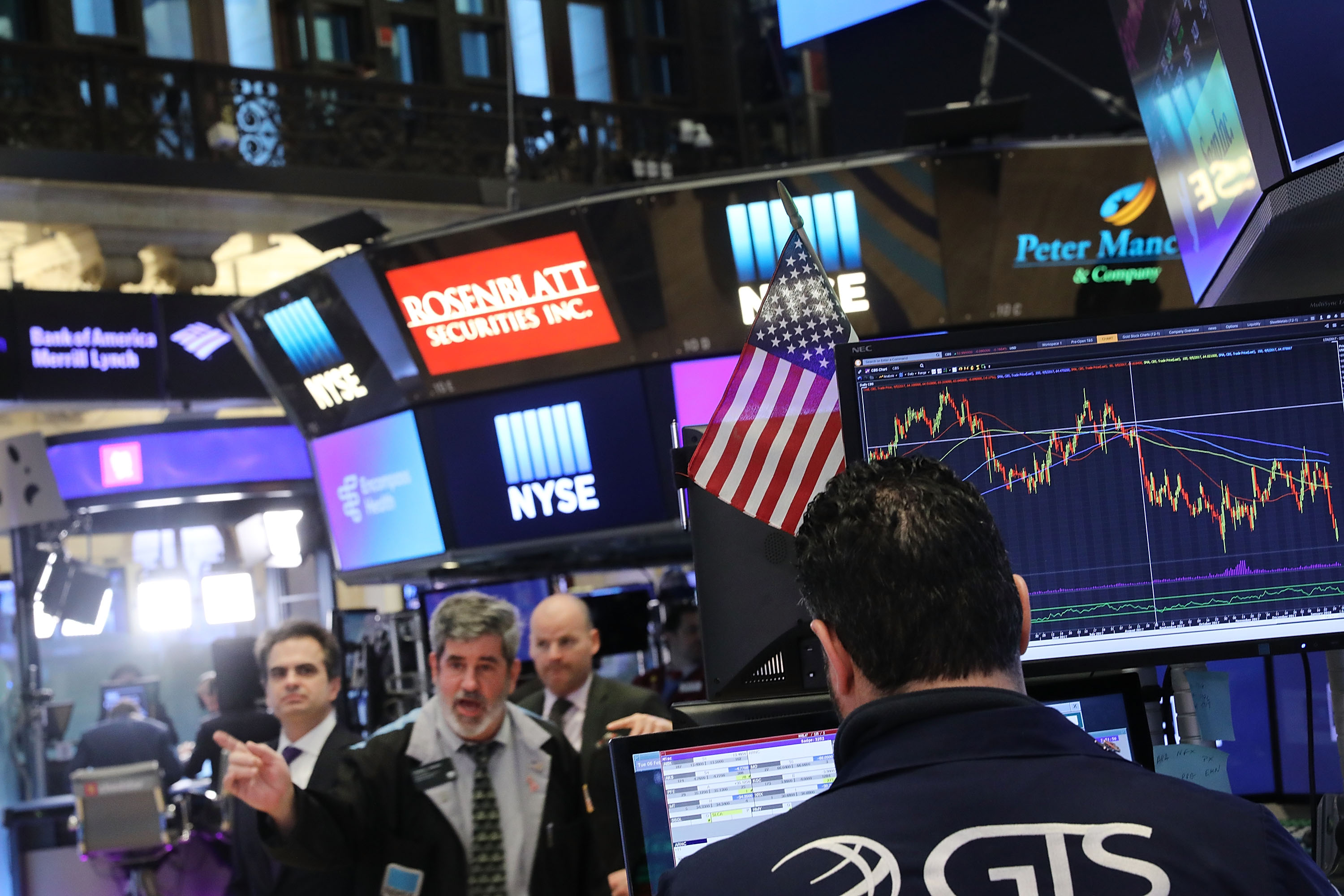
Traders work on the floor of the New York Stock Exchange on Tuesday. Spencer Platt / Getty Images
Stock markets, after stabilizing momentarily, returned yesterday to what the press likes to call “turmoil.” What does it all mean?
There’s no doubt that stocks have been due for a comeuppance for some time: they’re very expensive. Since stocks represent claims on corporate profits, present and future, the conventional way to value them is by measuring their price against those underlying profits (or “earnings” in Wall Street lingo, since to the owning class, profits from capital are just like wages for labor: as they like to say, they put their money to work). Ideally they’d be measured against future profits, but no one knows what they are, so the next-best thing to do is measure them against past profits.
The standard measure for that is the price/earnings (PE) ratio — the price of a stock (or a stock market index) divided by corporate profits per share (or total profits of the stocks in the index). Since the late nineteenth century, the PE ratio for the broad stock market has averaged sixteen; since 1950, it’s averaged eighteen. It’s now 27.