Opportunity Detroit
Detroit's glittering revival isn't just leaving most residents behind — it's premised on their impoverishment.
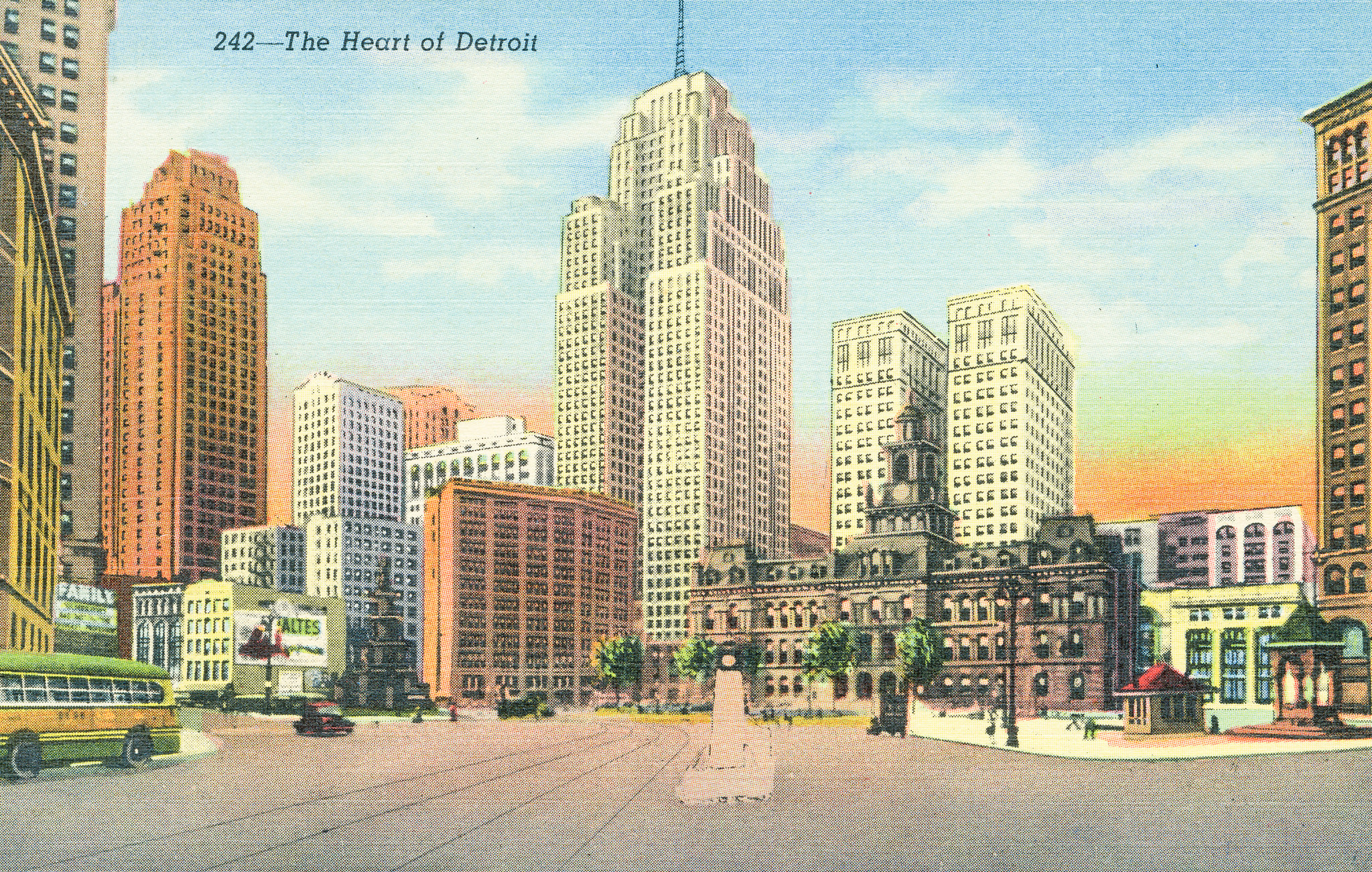
Thomas Hawk / Flickr
The scale of Detroit’s ongoing transformation is staggering. There are new hockey and basketball stadiums, a streetcar system and dozens of luxury apartment complexes. New storefronts showcase the wares of companies like Nike, Under Armour, and Whole Foods. Reconverted corporate skyscrapers look down on the city.
A century ago, Detroit turned itself into a mecca of Fordism. Now, after seven decades of capital flight that cost the city more than 90 percent of its manufacturing jobs, Detroit is being remade again — this time into a mecca of post-Fordism.
There is perhaps no greater emblem of this highly touted turnaround than the $900 million Hudson’s site project, which broke ground last month in downtown Detroit. Once the world’s largest department store, Hudson’s closed in the early 1980s, and the city imploded the building about a decade later. At the time, downtown Detroit stood so empty that photographer Camilo Jose Vergara proposed a public art project: “an American Acropolis,” with “a dozen city blocks of pre-Depression skyscrapers . . . left standing as ruins.”