Debating Black Freedom
A look back at Liberator, an anticolonial magazine that operated during a golden age for black radical publications.
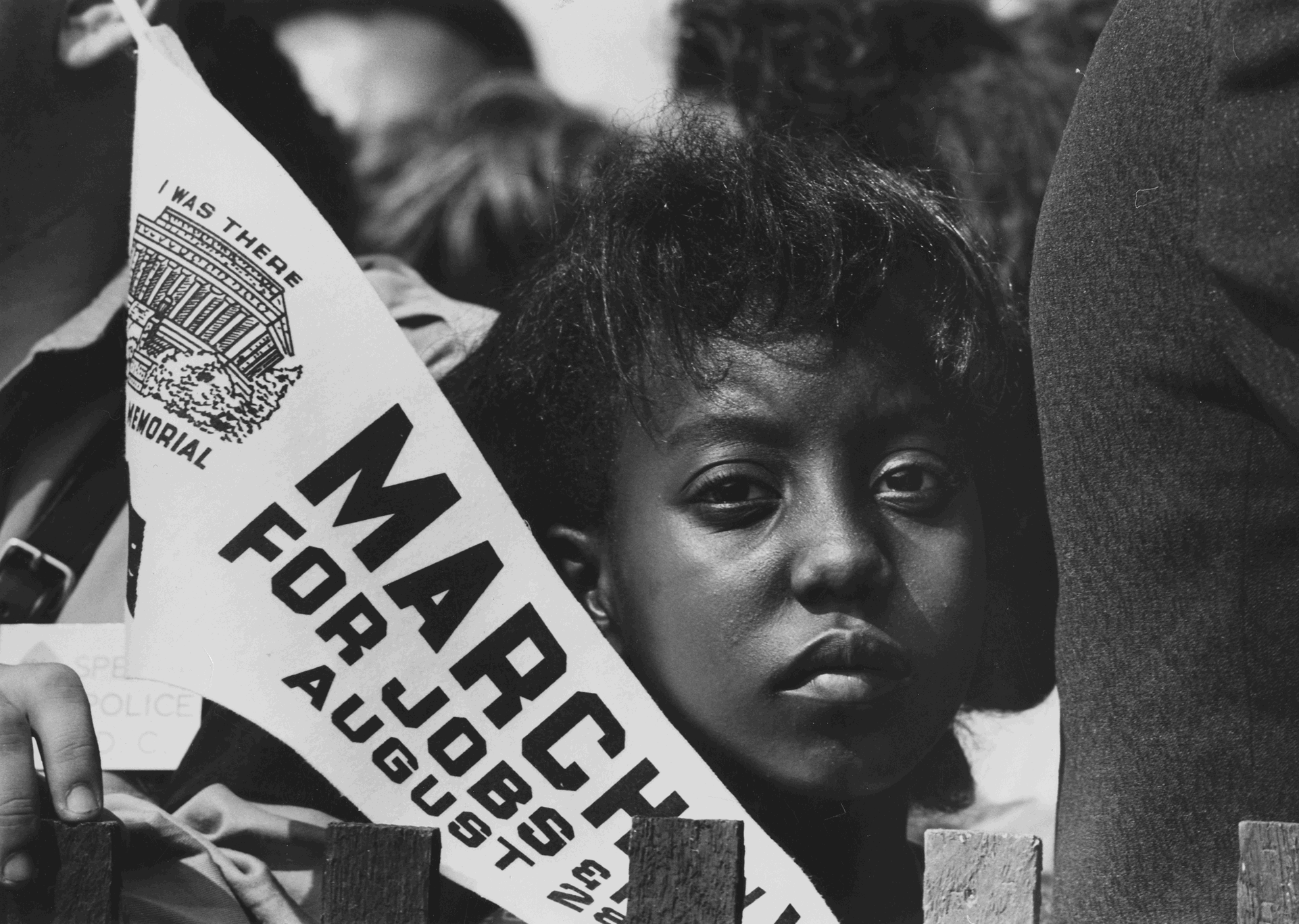
A young woman at the March on Washington for Jobs and Freedom on August 28, 1963. The US National Archives / Flickr
Throughout US history, African Americans have pushed the limits — and beyond — of what America claims to be. The questions posed by both intellectuals and everyday African Americans during the Reconstruction, New Deal, and Civil Rights eras have all left lasting effects on the country. So too with the US left: time and again, black radicals have pressed for an expanded scope of political and economic freedoms, for Americans at home and for people abroad.
Christopher Tinson’s important new book, Radical Intellect: Liberator Magazine and Black Activism in the 1960s, spotlights one critical organ of the African-American left during the tumultuous Civil Rights and Black Power eras. At a time when intellectual currents were in flux, inchoate and colliding, Liberator simultaneously served as an important forum for debate and a reminder of the diversity of the African-American left. The magazine, Tinson writes, “stood at the crossroads of knowledge production and insurrection,” providing activists and intellectuals a place where they could hash out their ideas and make appeals to others. Intellectually, it proved to be an important waypoint between the resurgent black nationalism seen in places like Harlem in the early 1960s and the burgeoning Black Power movement of the late 1960s.
Liberator magazine was founded in 1961 by several radical African Americans living in New York City. It operated at the nexus of a rising black nationalism, the nascent New Left, the remains of the Old Left, and the more militant elements of the Civil Rights Movement. The founders of the publication embodied this ideological and temporal mix. Pete Beveridge was a former member of the Communist Party, while Richard Gibson spent his early career reporting on the anticolonial struggle in Africa. (Editor in chief Dan Watts was the relative outlier, with a background as an architect.)