Evicting the Underclass
China’s campaign to expel migrant workers from Beijing is designed to wring more profit from urban land and reserve the city for elites.
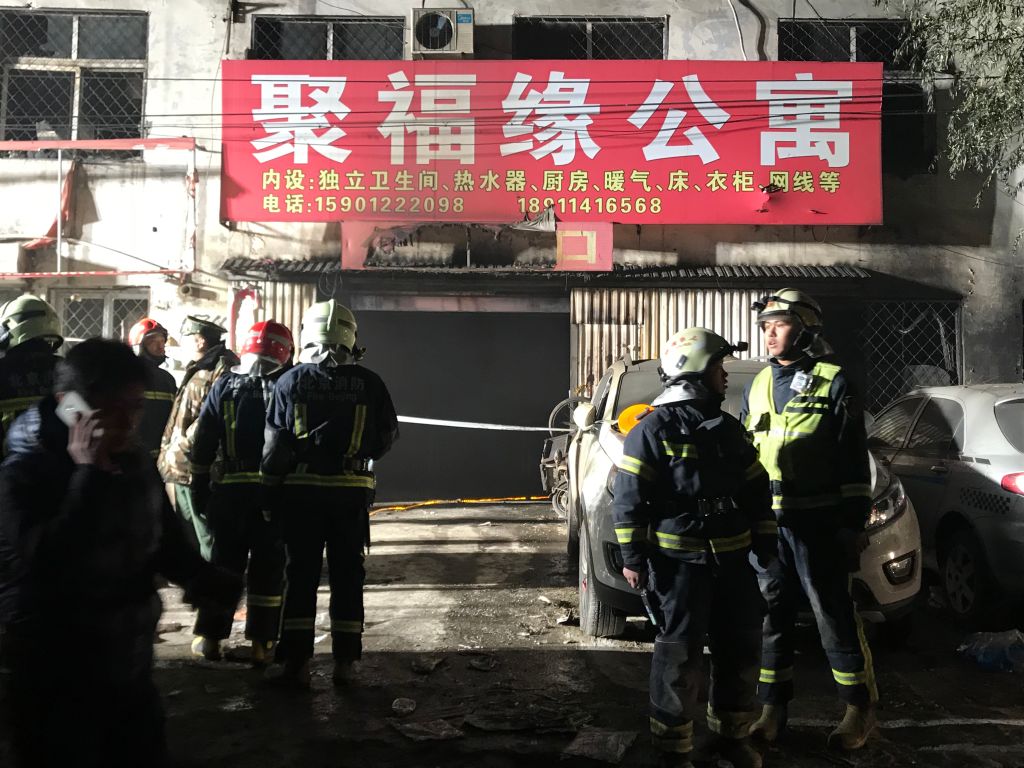
Firefighters work at the site after a house fire at Daxing District on November 19, 2017 in Beijing, China. Nineteen people were killed and eight others were injured in a house fire at Daxing District on Saturday night in Beijing.VCG / VCG via Getty Images
On November 18, a fire on the outskirts of Beijing killed nineteen people, including eight children. Skyrocketing rent in the urban core has pushed working-class people — especially migrant workers without local residency permits — into shoddily constructed, crowded, and poorly regulated housing, setting the stage for this all-too-predictable tragedy. Dangerous living conditions, exceedingly long commutes, and exposure to health risks are simply the price impoverished migrants have to pay in order to access the booming urban labor market.
Following the fire, the Beijing city government — almost certainly in consultation with national leadership — snapped to attention. Within days, it launched a forty-day campaign to address building safety violations. But the real intention has quickly become evident: to rid the city of people deemed extraneous.
These expulsions are consistent with China’s long-standing policies that dehumanize and exclude migrant workers. But purging Beijing of this population will also free up land for more profitable uses, giving the revenue-hungry city added motivation.