Revolutionary Possibility
China Miéville’s October depicts the transformative hope of revolution.
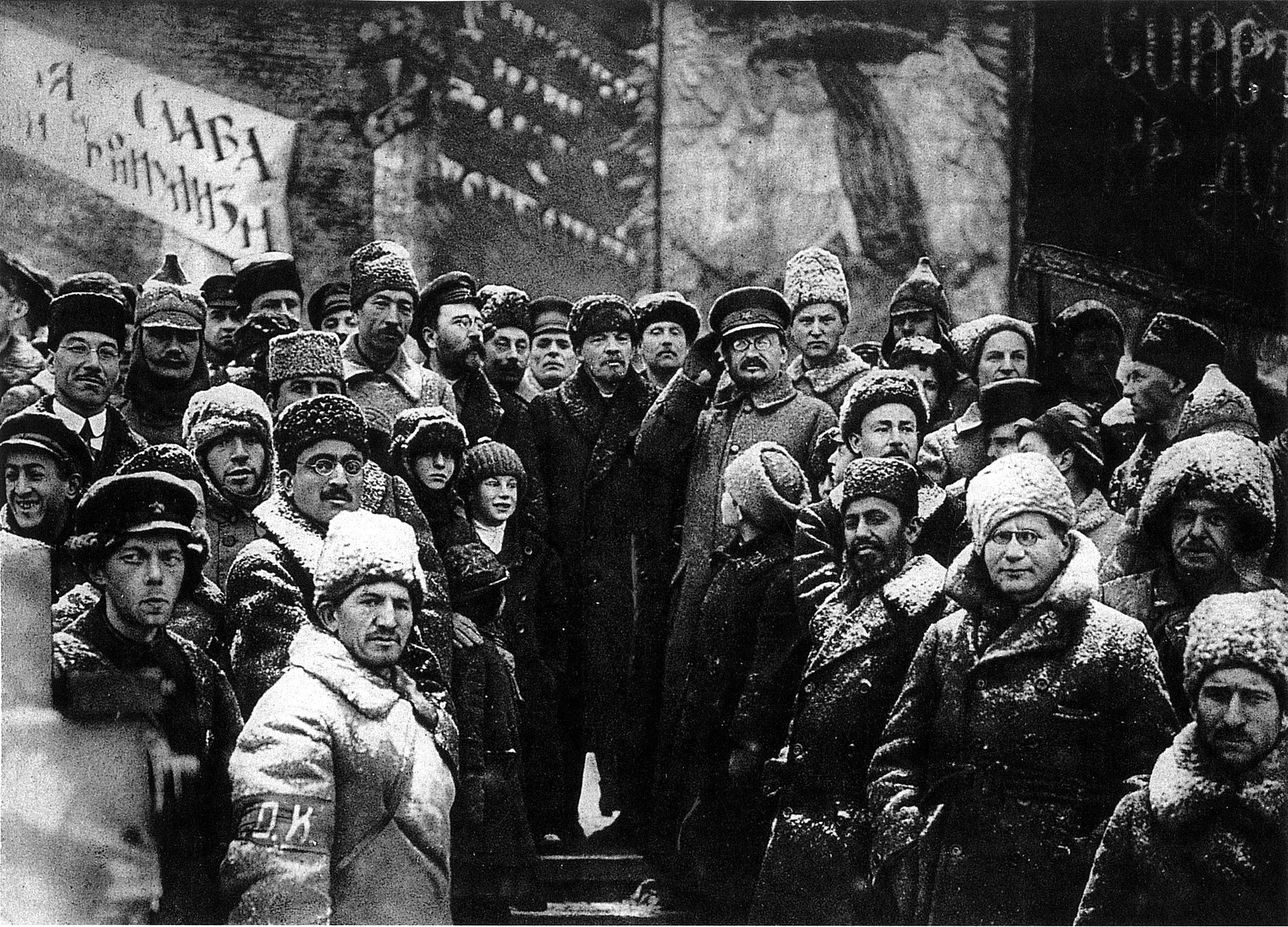
Soviet leaders on November 7, 1919, in Red Square, Moscow, USSR, celebrating the second anniversary of the October Revolution.L.Y. Leonidov / Wikimedia
October, China Miéville’s new book, describes the October Revolution as a moment of possibility. In its closing pages, Miéville explains why he wrote the book, despite the revolution’s aftermath:
Those who count themselves on the side of the revolution must engage with these failures and crimes. To do otherwise is to fall into apologia, special pleading, hagiography – and to run the risk of repeating such mistakes. It is not for nostalgia’s sake that the strange story of the first socialist revolution in history deserves celebration. The standard of October declares that things changed once, and they might do so again.
October depicts a pell-mell avalanche of one event crashing down on another, and men and women trying with varying success to guide the collisions — or at least survive them. Miéville’s novels often show people who thought themselves to be acting freely discovering that instead they have been enacting an inexorable logic, which, while not entirely determining their fates, renders many of their actions perverse or irrelevant. Yet there’s also a thread of counter-argument — a skein of moments in which people turn the tables on structure and write their own history.