Between Judges and Generals
The ouster of Pakistani prime minister Nawaz Sharif is yet another example of the judiciary's selectiveness and the military's undue influence.
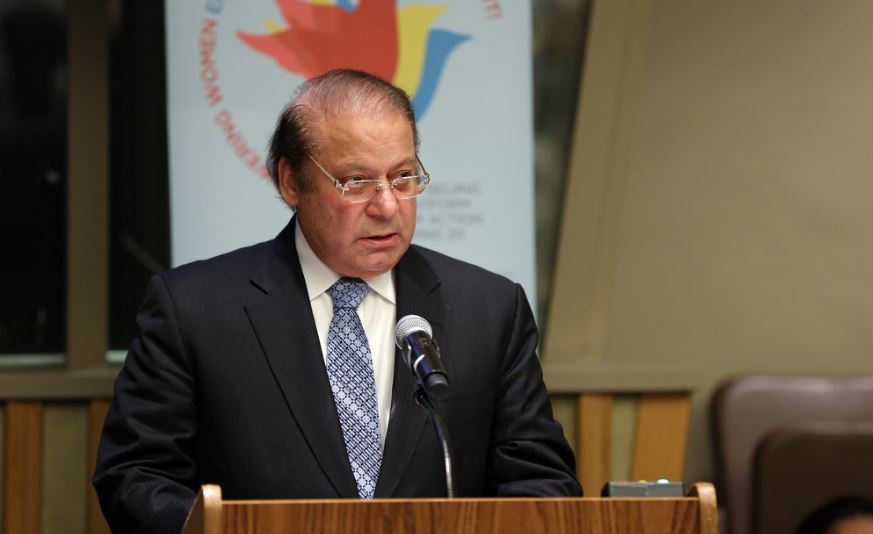
Nawaz Sharif in 2015. UN Women / Flickr
A coup in Pakistan’s checkered political life is never news. However, Prime Minister Nawaz Sharif’s disqualification from his post on corruption charges through a court verdict on July 28 has an element of newness about it. Instead of the Pakistan Army, the recent coup has been carried out by country’s top judges.
In the case of previous coups d’etat, Pakistan’s military would spearhead the overthrow. A pliant judiciary would unabashedly justify it by providing a legal cover. As an institution, this judiciary has prostituted itself. Top judges have legitimized every military coup and refused to hold generals accountable. Recently, the judiciary let former dictator General Musharraf slip abroad so that he could escape legal prosecution — and possibly a death sentence — for participating in a coup and thus violating the country’s constitution.
The judges have obstinately refused to hold the military generals accountable whenever the men in khakis were caught misappropriating the public funds or abusing their authority. Every time judicial accountability begins with the corrupt politicians and ends there. While the Sharif dynasty — which was founded in the 1980s by the military itself to counter the Bhutto dynasty — is fundamentally corrupt, the judiciary’s selectiveness means the July 28 court verdict to disqualify the outgoing prime minister technically for lifetime lacks any credibility whatsoever.