Identity Politics Can Only Get Us So Far
Let’s give identity politics its due, but let’s also be clear about why we need universalist politics.
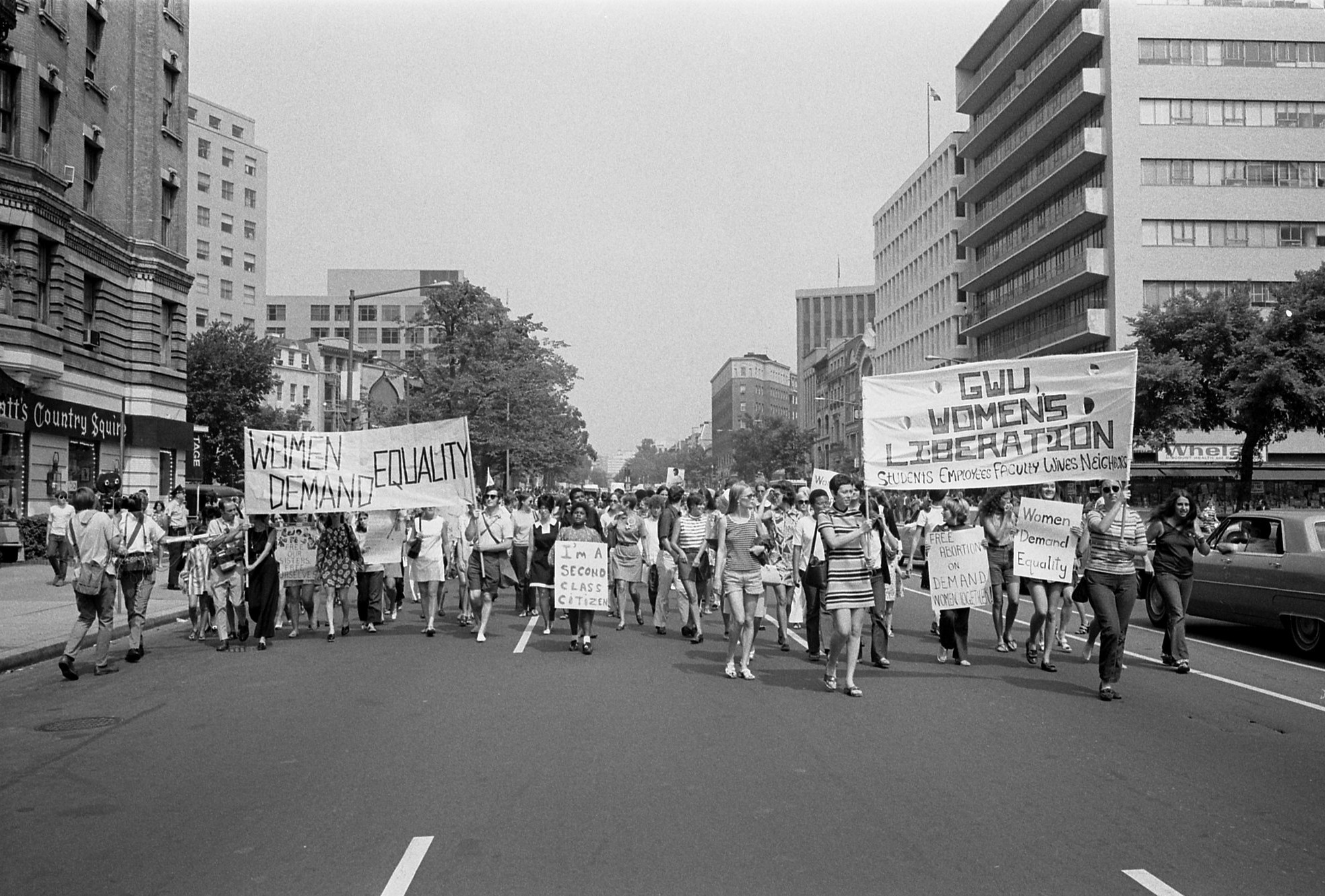
Women’s liberation march, 1970.Library of Congress / Wikimedia
I first encountered the assertion that “all politics is identity politics” some time in the 1990s. The claim seemed tailor-made for that decade, when Judith Butler was portraying all identity as performance and politics as a slow, staid, and distinctly non-revolutionary adjustment of social norms.
This idea has persisted, no doubt because the wider political conjuncture that shaped it still remains in force. It reverberates in current debates about the 2016 election and in discussions about the relationship between post-1960s social movements and a renewed socialist left.
At first glance, the idea looks like a useful shorthand for how politics really works. For instance, in Imagined Communities, Benedict Anderson showed how a certain kind of identity shaped the modern world. After Gutenberg, books, newspapers, schools, and other emergent institutions undermined ancient axioms, coaxed people to join different communities, and thus prepared the ground for the spread of nationalism and the rise of nation states.