GE’s Switch
Jeff Immelt’s resignation as CEO of General Electric shows that we cannot think of industry as finance’s opponent.
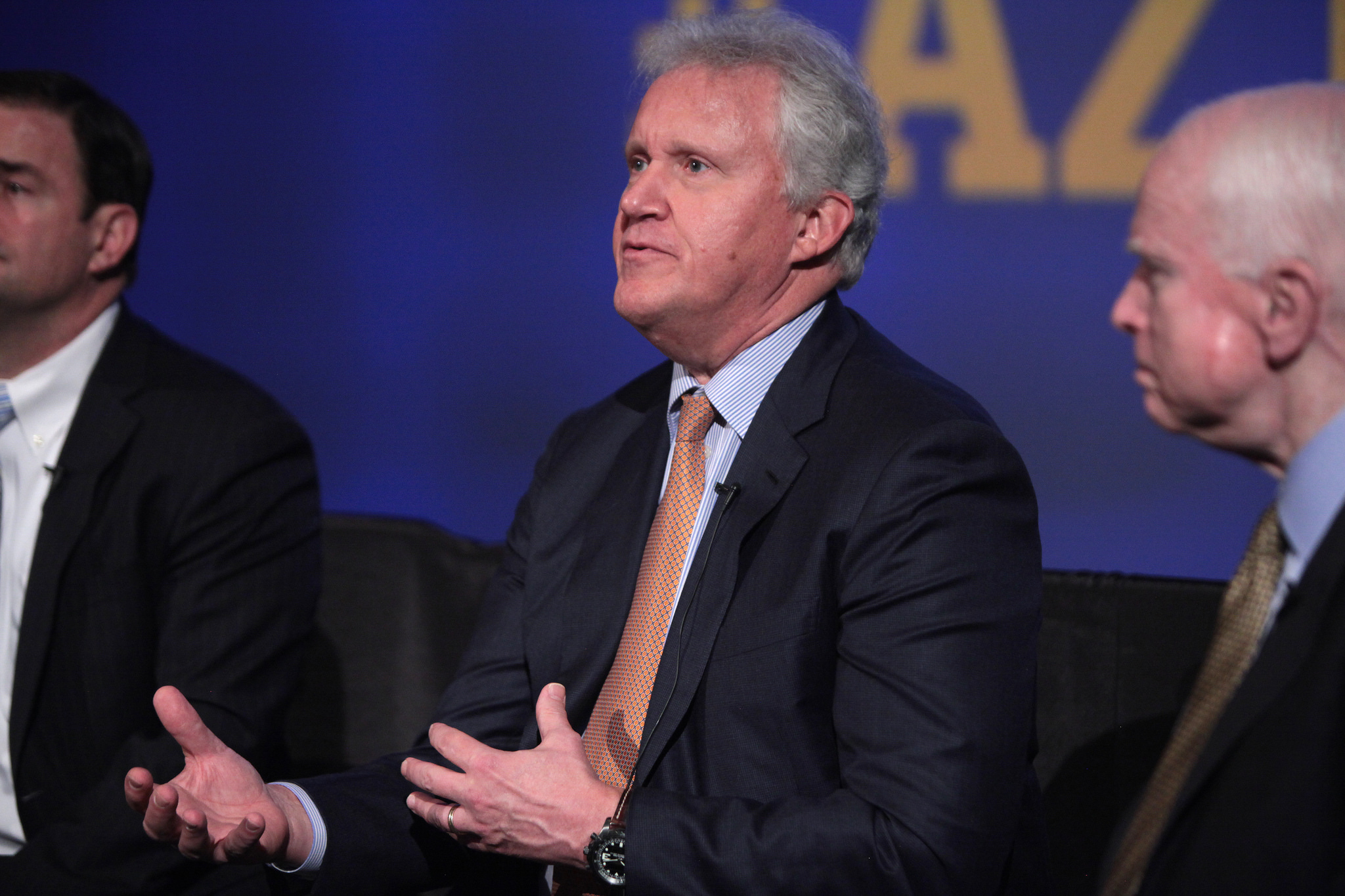
Jeff ImmeltGage Skidmore / Flickr
The resignation of General Electric CEO Jeff Immelt last month is the latest sign of the broad restructuring of political and economic power currently underway in the United States. His departure, and John Flannery’s arrival, reveals a lot about the new phase of financialization that has emerged from the Great Financial Crisis.
As financial markets and institutions became a more important part of the economy in recent decades, so too did they take on a larger role within corporations themselves, even ostensibly nonfinancial enterprises. This fundamental reorganization of corporate power eroded the institutional foundations of the New Deal’s so-called corporate liberalism, contributed to growing state authoritarianism, and allowed for the deepening penetration of financial markets and logics into every aspect of daily life.
Paradoxically, in the wake of the 2008 financial crisis, the state supported a further push toward consolidated financial control. As a result, a new phase of accumulation has stabilized, and finance has shockingly emerged from the crash even stronger than it was going in.