The Bill of Rights Was a Concession to Popular Struggles
Early US elites drafted the Constitution to check democratic uprisings that threatened the power of the ruling class. The Bill of Rights, a late addition to the Constitution that protected important freedoms, was a concession to these popular struggles.
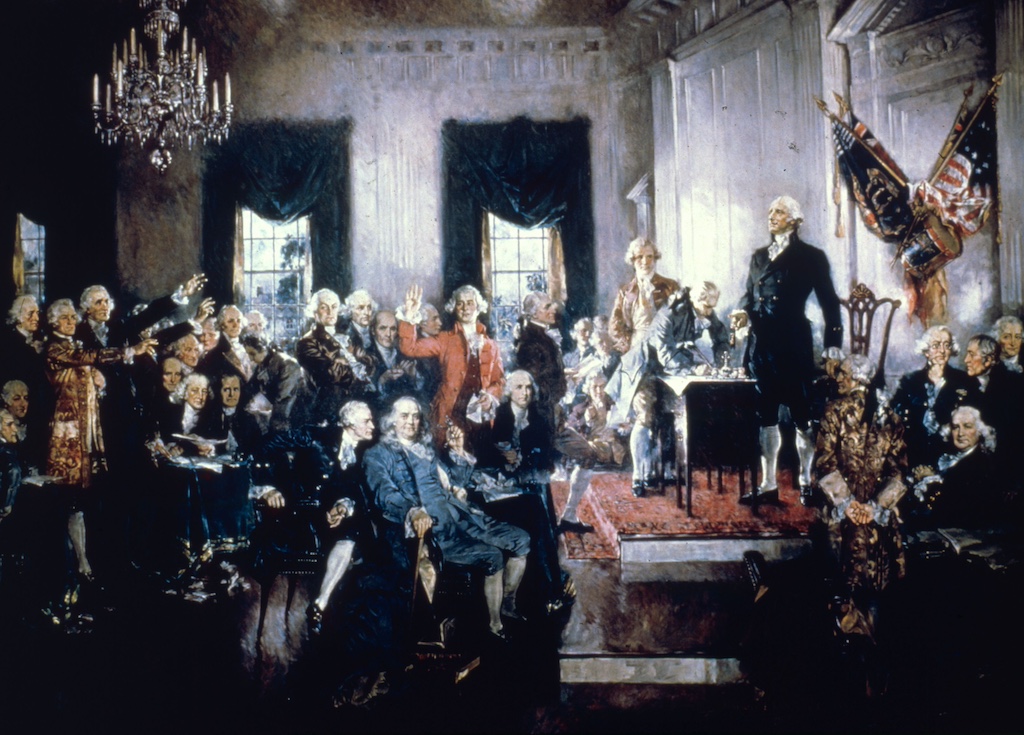
The signing of the US Constitution in 1787. (MPI / Getty Images)
When Americans today think of the Constitution, many of us think of certain cherished freedoms we hold dear: freedom of speech, religion, and the press. Protection from unreasonable search and seizure, as well as cruel and unusual punishment. The right to a trial by a jury of your peers.
All of these rights have two things in common. They are fundamental political rights of a free people, and none of them were in the Constitution drafted by the “Founding Fathers” in the summer of 1787 — they were added by the Bill of Rights, ratified in 1791.
One of the many myths drilled into Americans’ minds from a young age is the noble, enlightened ideals of the Founding Fathers. Ask any schoolchild why the US Constitution was written, and they’re likely to rattle off any number of platitudes and cliches. They might say “to defend our freedom” or “to protect democracy.” Someone slightly older, who’s taken a college-level history class, might mention the need to replace the Articles of Confederation — America’s often forgotten first constitution — which we are told was “too weak” a form of government to run the country. But that explanation raises the question: What exactly were the Articles of Confederation “too weak” to do?