No, Economic Populism Did Not Lose This Election
Over the course of her campaign, with all the wrong people in her ear, Kamala Harris rejected the type of economic populism that could have salvaged last month’s elections.
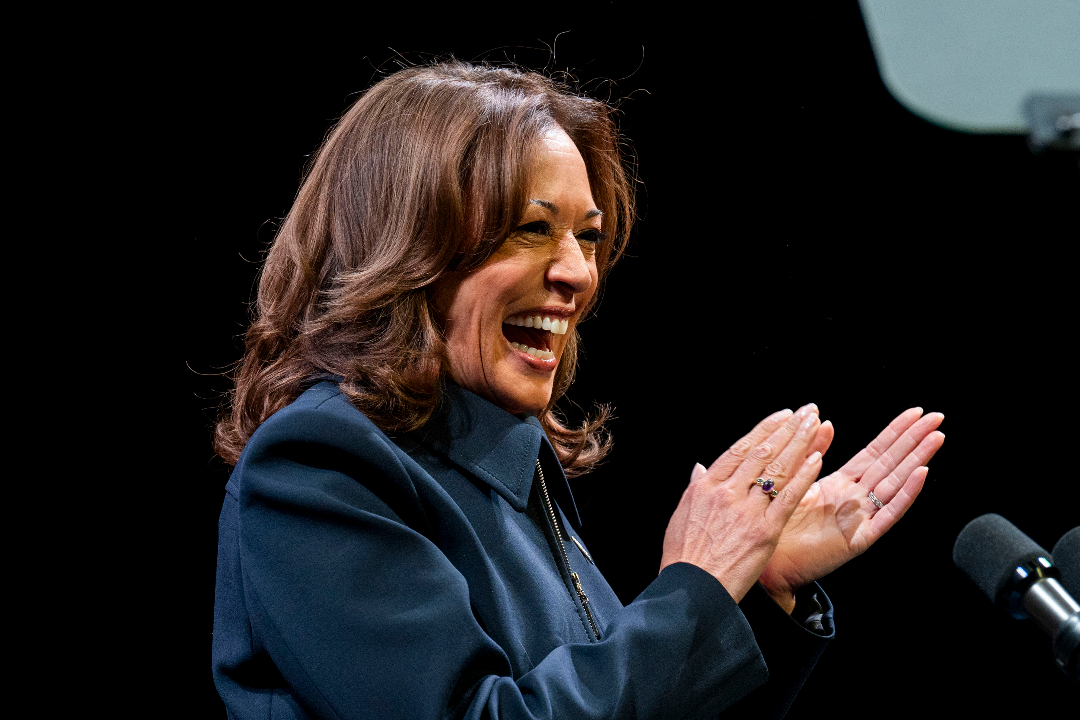
Vice President Kamala Harris at Prince George’s County Community College in Largo, Maryland, on Tuesday, December 17, 2024. (Annabelle Gordon / UPI / Bloomberg via Getty Images)
As a flurry of questions continues to swirl in the wake of Trump’s second victory, one topic that has been the subject of much debate, once again, is populism. Google searches for the term roughly quadrupled in the days following the election.
Ever since Trump’s first victory in 2016, commentators, politicians, and activists of all stripes have been fiercely debating the p-word. But now it’s reached fever pitch, especially as it relates to the Democratic Party itself. How populist was the Kamala Harris 2024 campaign, and how populist should it have been? And more broadly, how populist has the Democratic Party as a whole been, and how populist should it even be, if at all?
Having conducted four years of research on just these questions, the Center for Working-Class Politics (CWCP) is uniquely positioned to weigh in. Here’s what the data can tell us about how we got here, and where we ought to go next.