Big Oil Lobbied for a Wildfire Smoke Pollution Loophole
Because of a Big Oil–backed exemption, federal air quality data won’t reflect this week’s wildfire smoke. The exemption allows states to ignore pollution from “exceptional events,” freeing polluters from reducing emissions to offset smoke impact.
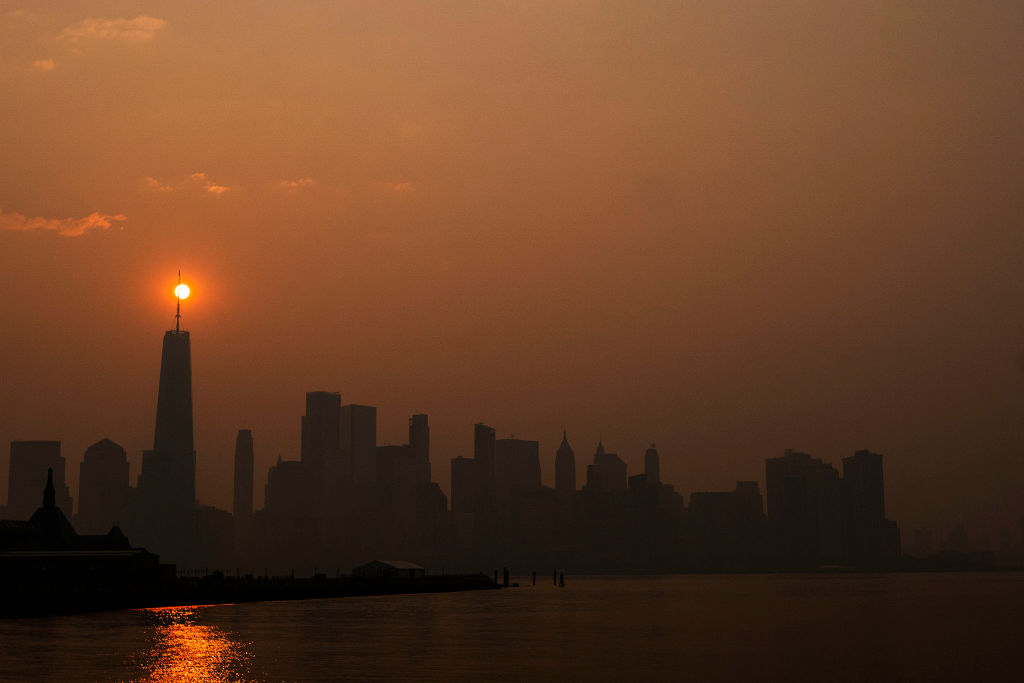
The sun rises behind One World Trade Center, while the smoke from Canada wildfires covers Manhattan, New York on June 8, 2023. (Eduardo Munoz Alvarez / Getty Images)
Seventy-five million people nationwide have been under air quality alerts, as days of smoke-filled skies sent soot levels soaring to more than ten times beyond what federal regulators consider safe for breathing.
But in federal air quality data, it will be as if those days never happened. That’s because a Big Oil–backed exemption in federal environmental law allows states to discount pollution from “exceptional events” beyond their control, including wildfires. And while environmental regulators are considering cracking down on soot and particle pollution, industry groups are opposing those reforms, too.
Under current rules, states like New York, where residents have been urged to remain indoors, won’t have their “hazardous” air quality index levels count against their compliance with the federal Clean Air Act — so emissions sources in the state, for example, won’t be required to reduce other discharges to help offset the smoke pollution.