Uber’s Proposal for Portable Benefits Is a Poison Pill
Uber has finally found a jurisdiction in Canada that will allow it to create a new legal category for its workforce. To sweeten the deal, it's offering a meager portable benefits system — but the actual benefits will all accrue to Uber.
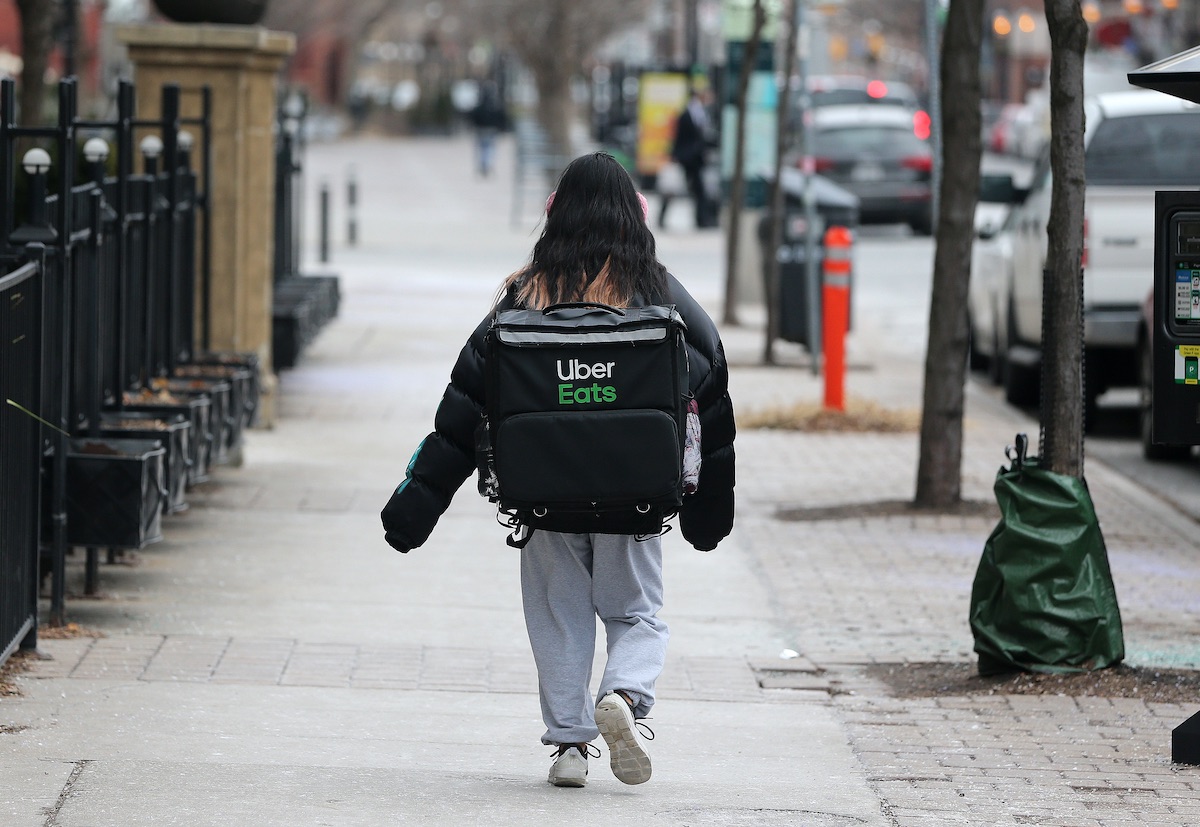
An Uber Eats worker delivers food in Toronto, Ontario. (Steve Russell / Toronto Star via Getty Images)
In recent years, Uber’s business model, which relies on a precarious and ambiguously classified workforce, has been under threat by labor organizations and progressive governments seeking to combat the ills of the gig economy. The company has lost a good number of legal challenges brought by drivers. More jurisdictions are now contemplating laws like California’s AB5 that seek to clarify the status of the platform’s drivers as employees.
After over a decade of running at a loss, the ride-sharing app saw its first profitable quarter in winter last year. The sustained increase in the value of the company’s share price has, however, kept investors interested. In an industry in which tight profit margins are the norm, benefits and guarantees of basic, minimum standards of work pose a challenge to Uber.
Anticipating more legal challenges, Uber has studied the legislative defense playbook and come up with a plan. Rather than get litigated or legislated into an employer-employee relationship, it now seeks allies in government and the labor movement to help it redefine its drivers as a new type of worker. This worker hovers in a strange state of indeterminacy — not quite an independent contractor but also most definitely not an employee.