Succession Is a Show About Capitalism in the Era of Economic Stagnation
Succession captures the insanity of elite culture in contemporary capitalism. Like their real-world counterparts, the show’s characters desperately fight for an ever-higher place at the top as the millions below them suffer.
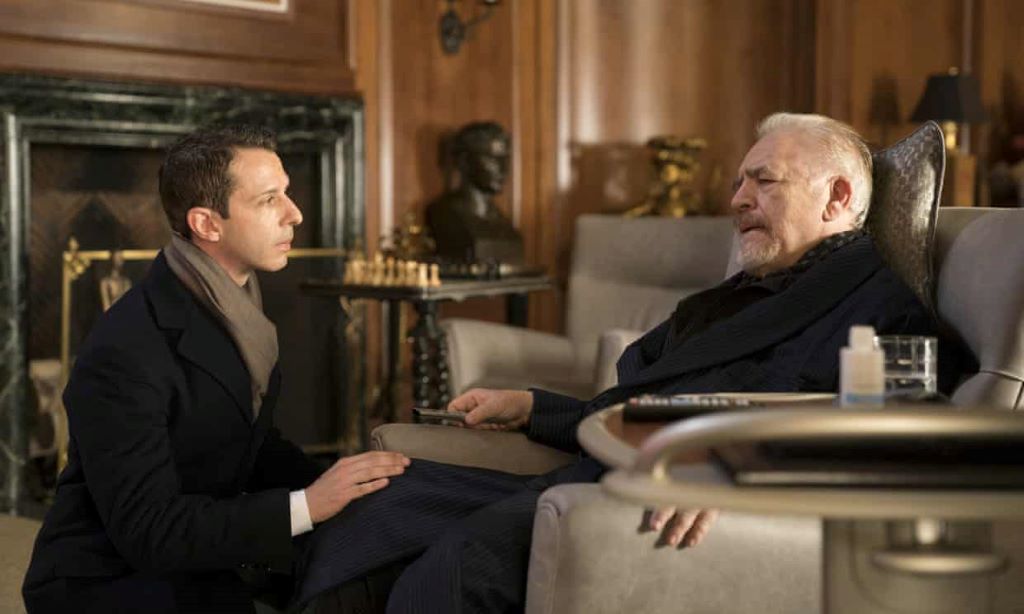
Jeremy Strong and Brian Cox as Kendall and Logan Roy in Succession. (Peter Kramer / HBO)
In the Anglophone world, no feeling has become more generalized since the end of the postwar boom than that of being locked in an unchanging cycle. HBO’s hit show Succession captures this sense more perceptively than any series in recent years, homing in on it from the perspective of the ruling class.
Taking inspiration from a mishmash of elite families — the Murdochs, Redstones, and more — the film à clef series offers viewers a voyeuristic look at the life of elites, rife with its infamous cruelty and conspiracy. The central question of the show — who will succeed Logan Roy as head of Waystar Royco, the mogul’s media and entertainment empire? — drives the series forward.
Resolution is not forthcoming, and the desire on the part of Logan’s children and the viewers to know what will come next is not satisfied. Instead, the children are locked in a limbo: competing against one another in the hope that proving their ruthlessness may garner them favor with their father and bring them closer to the top job.