The Job Market Is Strong — but Not Strong Enough to Chip Away at Corporate Profits
Thanks to COVID-related developments like expanded unemployment insurance, US workers have seen wages increase. But corporate profits have grown even more — meaning labor’s share of the economic pie is still small compared to its 20th-century peak.
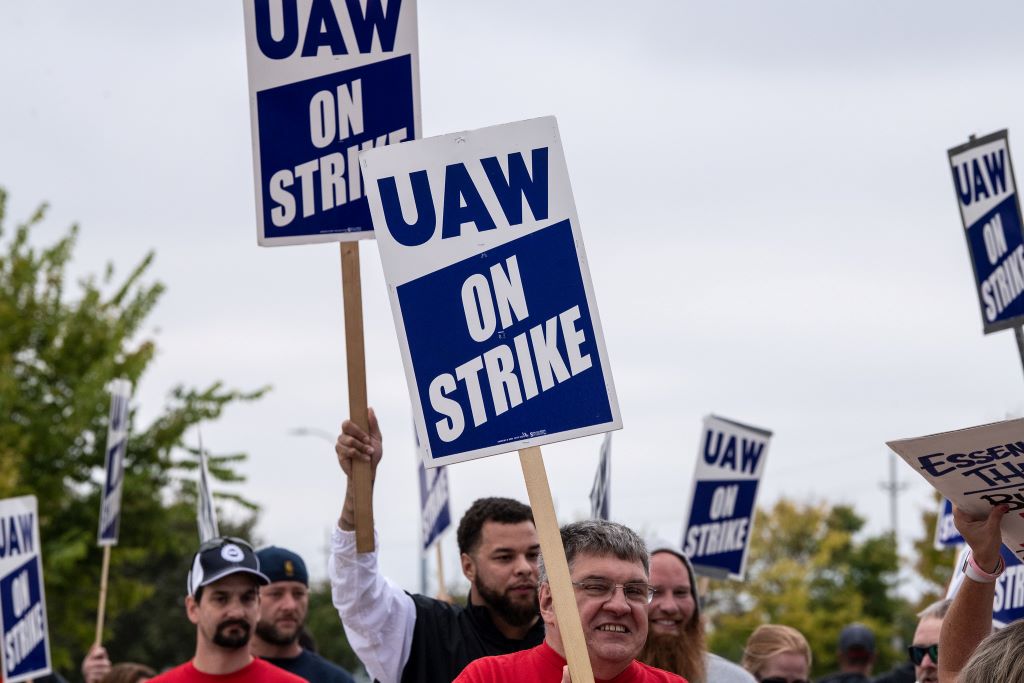
United Auto Workers Local 450 members on strike at the John Deere Des Moines Works, in Ankeny, Iowa, on October 20, 2021. (US Department of Agriculture / Flickr)
As the country’s CEOs complain of labor shortages and fearmonger about inflation, it’s becoming commonplace to observe that America’s workers are doing relatively well by conventional measures. On the heels of an economic contraction that began by annihilating over 20 million jobs, unemployment is down, wages are up by nearly 5 percent over the past year, and Americans have more money in their savings accounts than they’ve had in a generation.
The flipside is that big business, for all the whining of its powerful lobbies, is actually doing even better, with corporate profits now reaching levels not seen since the 1950s. Those profits are up a whopping 37 percent since last year, according to data released last month from the Department of Commerce — a staggering figure given the economic devastation wrought by COVID-19. Worker compensation is up too: some 12 percent, as per reporting from Bloomberg News.
At face value, it all paints a pretty rosy picture of US capitalism and appears to vindicate one of its animating myths: profits are up, but workers are also getting paid more. Unemployment is down, and concerns about inflation notwithstanding, labor and capital alike seem engaged in an enterprise for mutual benefit. It’s a tidy little story, and also one that misrepresents both America’s current economic picture and the developments that have led to it.