Pro-Refugee Mayor Mimmo Lucano Is Being Jailed, But He Has Justice on His Side
Mimmo Lucano is famous as the Italian mayor who rejuvenated his long-abandoned town by allowing refugees to live in empty homes. Yesterday, he was sentenced to thirteen years in jail for the crime of helping human beings in need.
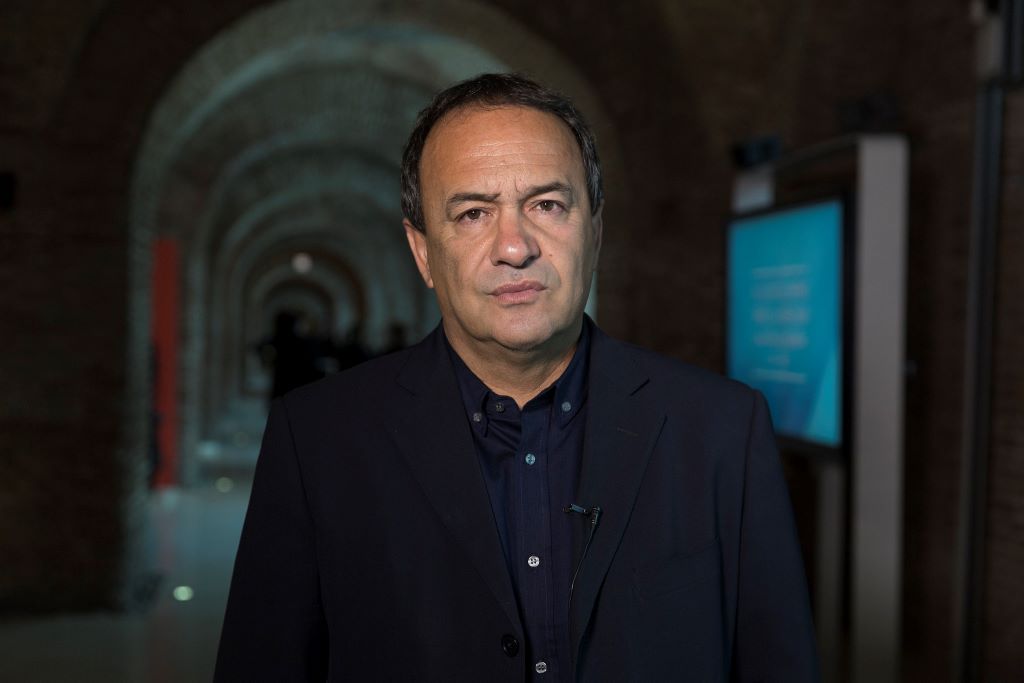
Domenico “Mimmo” Lucano, former mayor of Riace, Italy, photographed on July 3, 2017. (Soledad Amarilla / Ministry of Culture of Argentina via Flickr)
There are sentences which, beyond being unjust, and thus more than questionable, openly defy justice and our sense of what is fair, what is right, what ought to be. The verdict passed by the judges in Locri was not issued “in the name of the Italian people,” a large part of which is instead in shock and deeply angered today. Rather, this is a shameful conviction delivered by a repressive and xenophobic nation-state, which has for some time already been waging an undeclared war on migrants under the banner of sovereigntism and closed borders.
Various means have been deployed in this conflict: sequestering NGO rescue boats, indiscriminate pushbacks, having people tortured in Libyan camps, and leaving them to die at sea. But also striking against those citizens who won’t accept being complicit and who help those who arrive here. This is the context in which we should read the thirteen-year-long prison sentence against Mimmo Lucano — an eminently political decision. Not only because it is double the length of jail time sought by the prosecution, not only because it is the same as the sentence handed down to Luca Traini, the fascist who shot “blacks” (in the Macerata attack, which took place just weeks before the 2018 general election) or the sentence handed down to a member of the ’Ndranghetà (Calabrian mafia) with several crimes behind him. But also because it is an explicit message against anyone who dares to imitate his example in the future. The message is that those who welcome migrants are criminals.
And yet the question goes even further than migrant reception. To understand this, we should briefly look back to that summer day two decades ago when a sailboat heading from the Turkish coast was spotted at sea. Its cargo: Kurdish refugees who had escaped persecution. That was in July 1998. Suddenly, the forgotten town of Riace, stuck in the postwar decades, almost emptied out by emigration, asleep and resigned to the diktats of the world’s most powerful mafia, woke up to new life. The school reopened, the streets of the village were repopulated, abandoned houses were restored, and sales resumed in the shops.