Bernie Brings the Amazon Union Drive to Washington
At a Senate Budget Committee hearing yesterday, with Bernie Sanders presiding, economists, labor experts, and the day’s star witness — Jennifer Bates, an Amazon warehouse worker in Bessemer, Alabama — exposed the grim workings of an economy that continues to funnel wealth and power to a tiny capitalist elite.
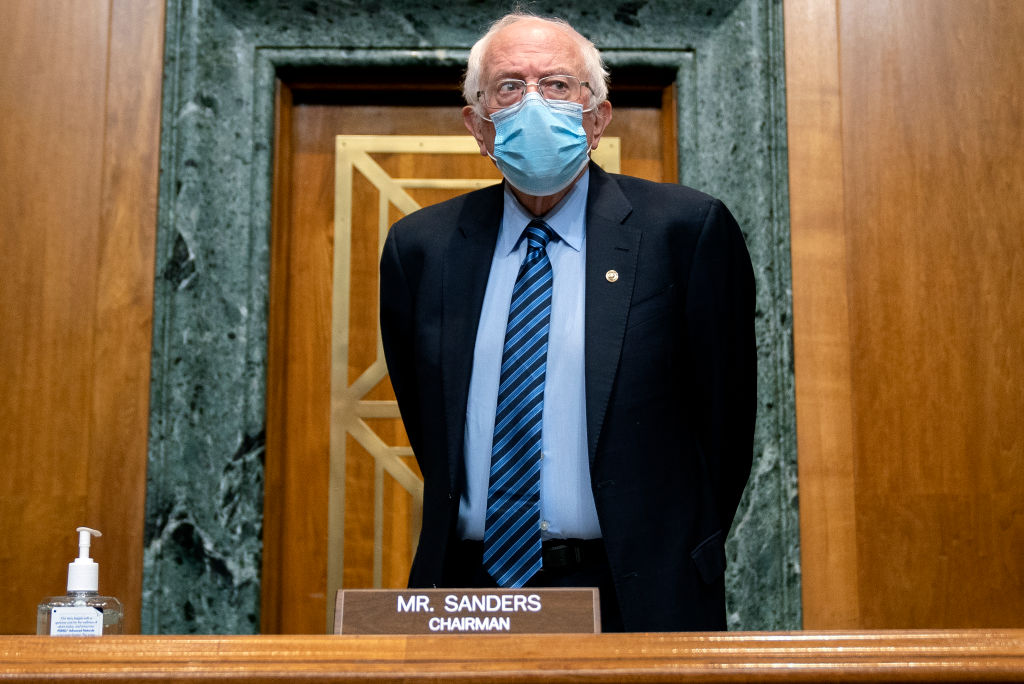
Senator Bernie Sanders arrives to a Senate Budget Committee hearing on February 25, 2021 in Washington, DC. (Stefani Reynolds-Pool / Getty Images)
The Senate Budget Committee held a hearing yesterday on the “Income and Wealth Inequality Crisis in America.” Bernie Sanders, the committee chairman, convened the hearing to focus attention on the unfolding battle in Bessemer, Alabama, where around 5,800 Amazon warehouse workers are currently voting on whether to unionize with the Retail, Warehouse, and Department Store Union (RWDSU). It follows closely on the heels of a similar hearing on workers’ wages.
Sanders was one of the first elected officials to publicly back the union drive, and yesterday’s hearing framed the campaign as the David vs. Goliath showdown that it is: Jeff Bezos is the richest man in the world, while one in four Bessemer residents live in poverty. If ever income and wealth inequality were on display, it’s in these Amazon workers’ attempt to unionize and Bezos’s refusal to let it happen. The Amazon CEO has poured money and resources into destroying the union effort, from hiring pricey anti-union consultants, to holding captive-audience meetings, to putting up anti-union flyers in the warehouse’s bathroom stalls.
“The simple truth is that today in America, the very, very rich are getting much richer, while tens of millions of working-class Americans are struggling to put food on the table and take care of their basic needs,” said Sanders in opening the hearing. He went on to note that while millions of people in the United States are in crisis during the pandemic, worrying not only about their health and safety but about whether they can pay rent, feed their families, and avoid total financial collapse, the country’s 660 billionaires have become $1.3 trillion richer (“that’s trillion with a ‘t,’” noted Sanders).